
MoCA/NY has partnered with New Ceramics, a European ceramics magazine, to bring readers one article from their print edition twice a year. The goal is to bridge and strengthen the global clay community by sharing knowledge, celebrating remarkable work from around the world, and supporting one another.

Originally published in New Ceramics Magazine, March/April 2026.
Winning a prize in Jingdezhen was deeply meaningful because of the weight of history embedded in that place. It’s a city where porcelain is not simply a material but a way of life, and to be recognised there—as an emerging ceramic artist—felt especially significant. Having my technique and practice acknowledged on a global stage, in the place where porcelain was first developed, gave me a strong sense of contributing something new to an ancient and ongoing ceramic continuum.
I’m continually excited by the way my career in ceramics has allowed me to travel internationally and pursue research as a form of lived experience. Being able to encounter artworks I’ve studied for decades—previously known only through books and libraries—has been incredibly enriching. Traveling reinforces how culturally specific ceramic traditions can be, while also highlighting how the material connects us across time and geography, giving me confidence to pursue a deeply personal and idiosyncratic practice in dialogue with history.
I was raised by creative women. Although none of them identified as artists, they were all highly capable craftswomen, and art was genuinely valued in our home. My mother is a piano teacher, so creative practice was part of everyday life. My father was a detective, and we shared an interest in the history of objects—the stories they carry, where they come from, and what they reveal over time.
Ceramics became my favourite medium after my first experiences with clay in early primary school. As a teenager, I was friends with a porcelain doll maker who encouraged my interest, and I became fascinated by learning a material language that wasn’t tied to family tradition or inherited skills. Ceramics felt entirely mine—a new and exciting field to master—and that sense of curiosity and ownership continues to underpin my practice.
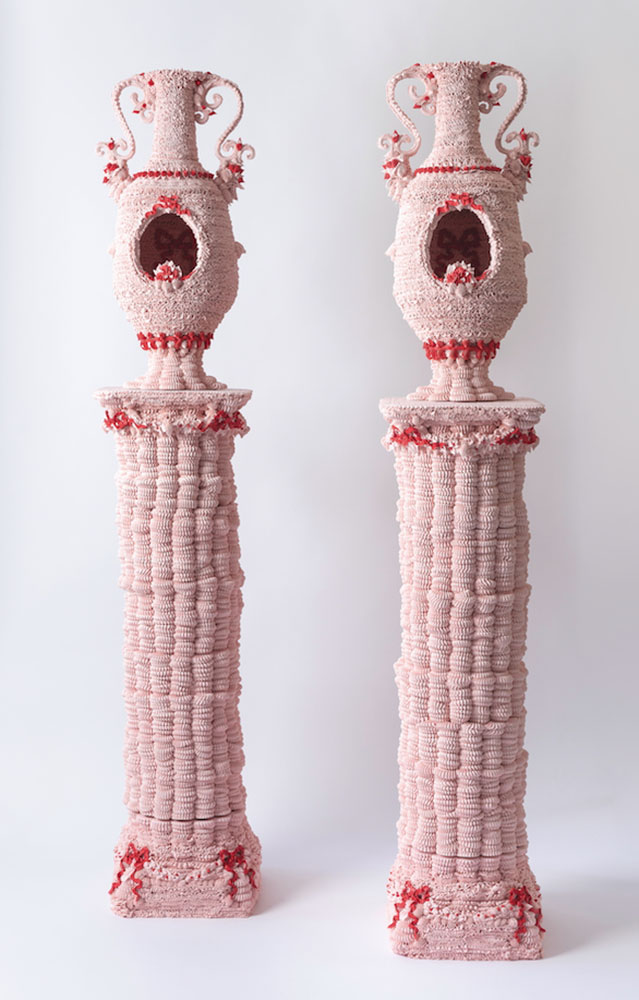
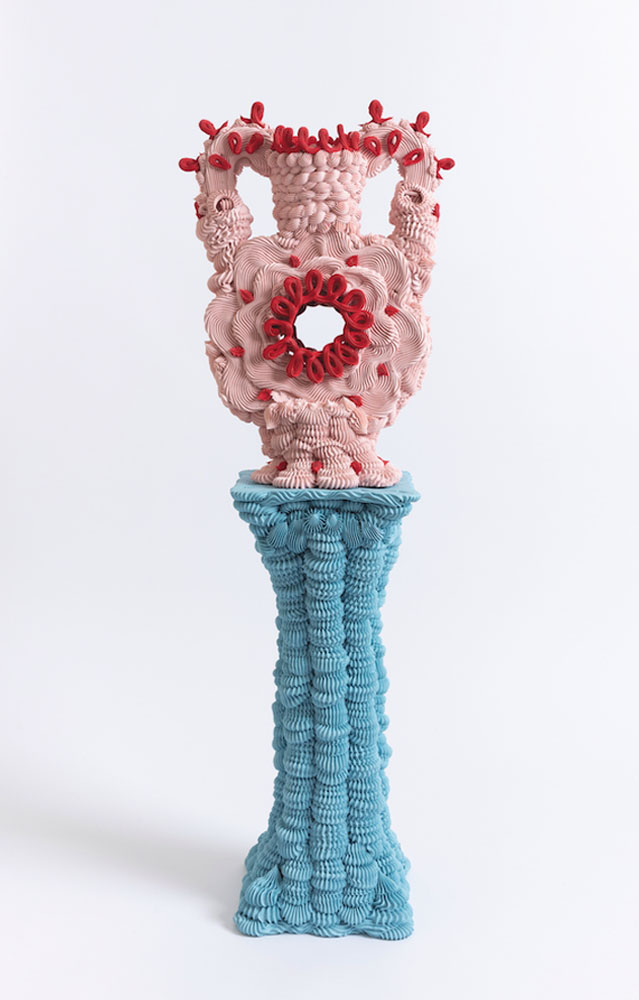
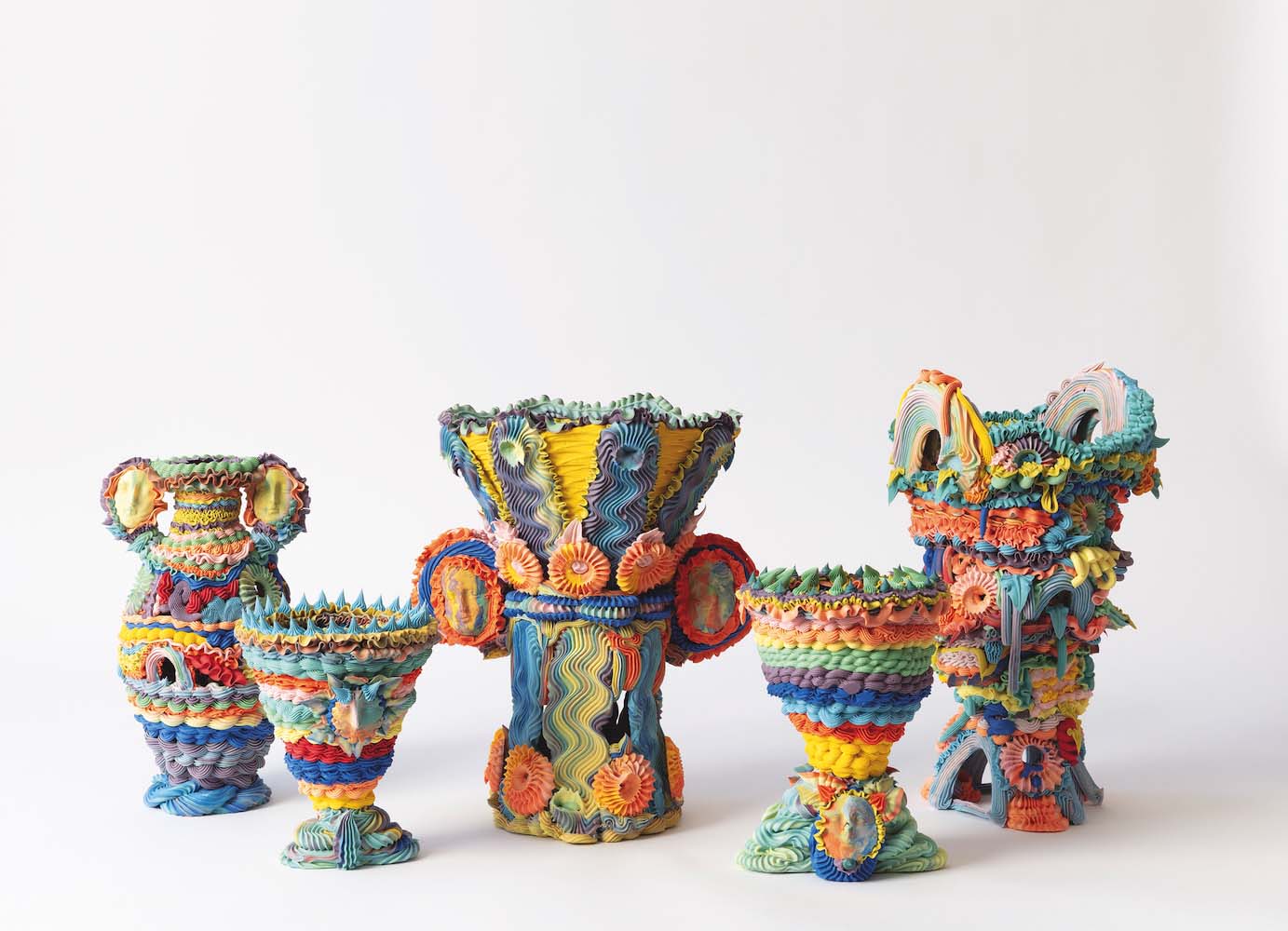
I’m drawn to low-fired traditions like faience and majolica because of their immediacy, intimacy, and pictorial charm. At the same time, I’m inspired by the high art of porcelain and its historical associations with class, style, and refinement. Sugar art and porcelain creation in the Western world were intricately linked, and I’m fascinated by how decorative practices crossed between ephemeral sweets and enduring ceramics. Exploring this connection allows me to work with ornamentation in ways that are both playful and historically informed, reclaiming these decorative traditions as meaningful, expressive forms.
" This unusual combination—playful, seductive, and technically demanding—alongside its historical roots and a feminist craft-based perspective, allows me to explore the ideas and stories I care about with a personal and unique stamp. "
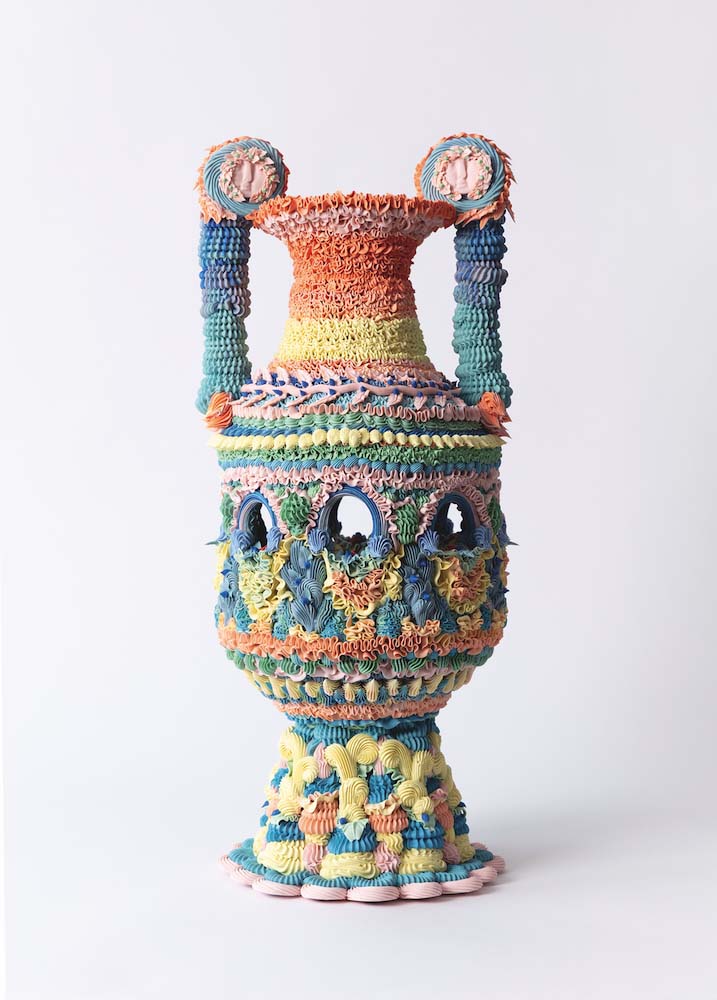
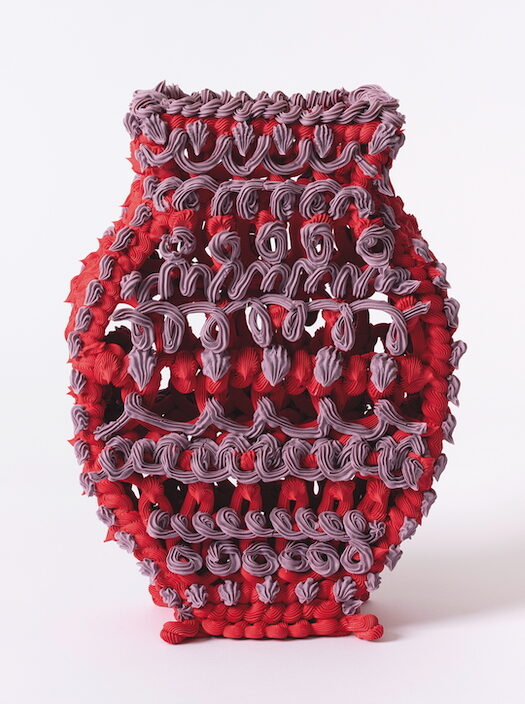
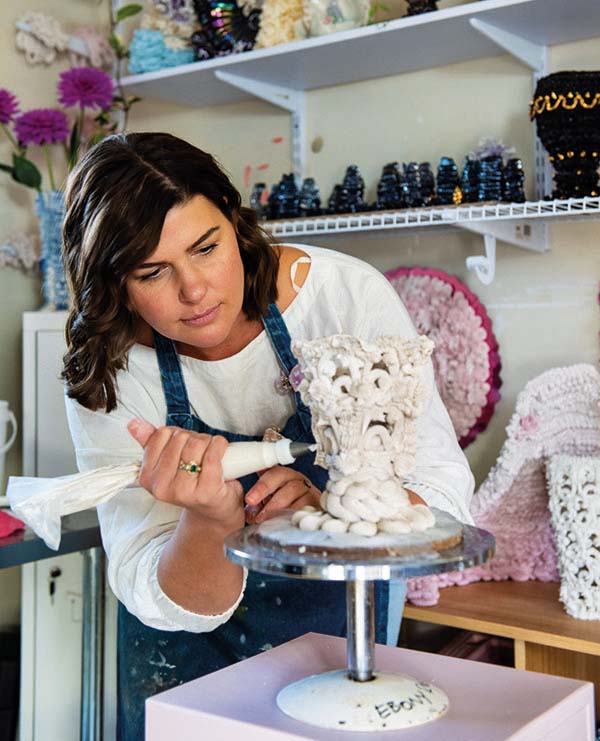
I work with soft, piped slip because it’s where my journey with clay has naturally led me. It has always felt uniquely connected to my life and interests. At first, I didn’t imagine it would become more than a way of replicating iced cakes in porcelain—clay can imitate almost anything, and that part wasn’t difficult. But by allowing myself to keep pushing and experimenting, I feel I’ve developed my own language and an individual technique. I’ve taken it further than I ever imagined, surprising myself with what the material can do, and it continues to fill my cup creatively.
This unusual combination—playful, seductive, and technically demanding—alongside its historical roots and a feminist craft-based perspective, allows me to explore the ideas and stories I care about with a personal and unique stamp. Using tools and methods borrowed from cake decorating, sewing, and other traditionally “domestic” practices is part of that exploration, giving my work a tactile, emotional, and conceptual depth that I wouldn’t achieve otherwise.
Adding a teaching qualification was a conscious choice to help me build the life I wanted. I wanted a career that could support me financially and creatively if I couldn’t work as a full-time artist, and teaching offered a way to stay entirely connected to the arts while earning a living. I taught full-time for a decade before returning to full-time study to complete my MFA in my late thirties.
Now, teaching continues to support my career as an artist. Lecturing, running workshops, and engaging with students allow me to articulate and reflect on my practice, while also staying immersed in the evolving world of ceramics. It’s a reciprocal process—teaching informs my studio work, and my making enriches what I bring to students. I see it as a vital part of my creative ecosystem.
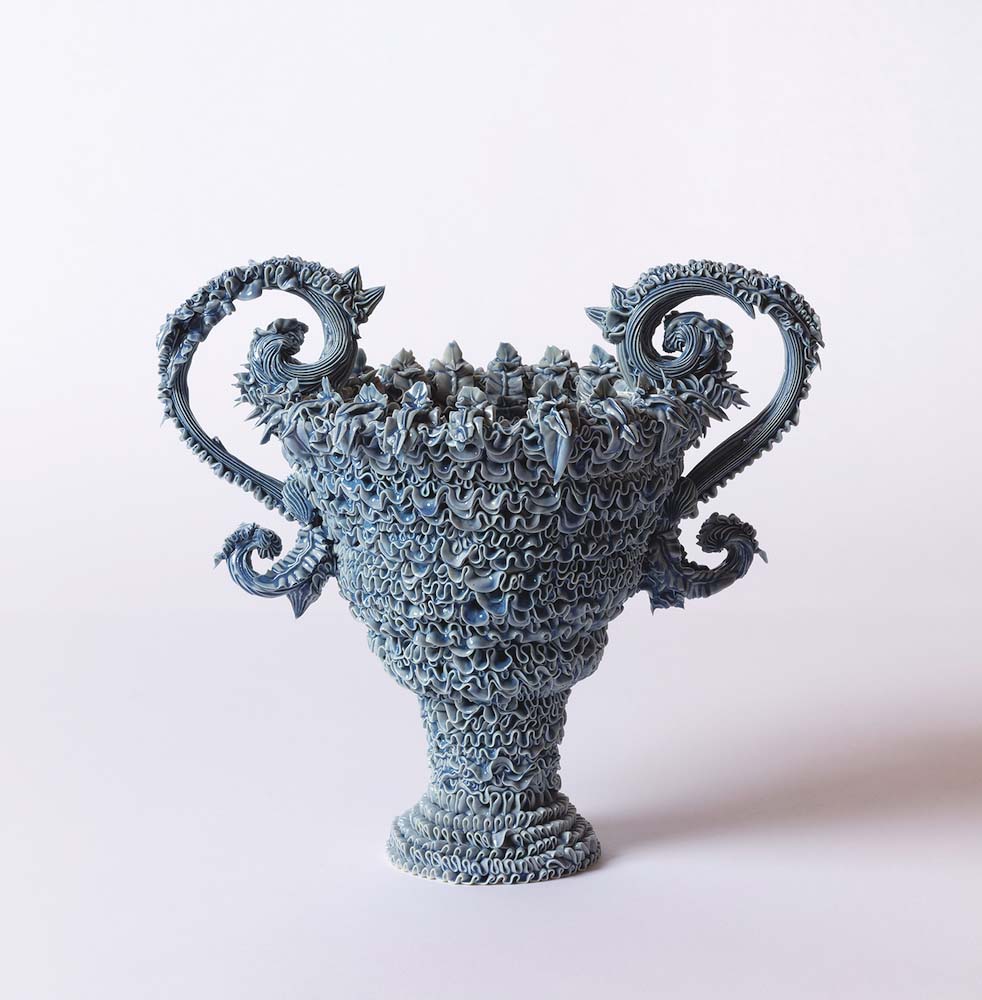
" I have developed a style I'm proud of, but I want to remain experimental in outcomes. "
I’ve recently been working with vessel forms, and I want to continue this into larger architectural works, where decoration becomes structure and porcelain functions as both surface and form. I’m interested in pushing this further—testing how far fragility and excess can be sustained physically and conceptually.
It’s very easy to get pigeonholed in creative practice, particularly in ceramics, where the history is vast, and artists can be defined by a single style or technique. I have developed a style I’m proud of, but I want to remain experimental in outcomes. I aim to respond to the experiences and stories that resonate with me, and I strive to keep learning and developing my craft—ceramics remains an endless source of inspiration. Whether building large-scale works or delicate, intimate pieces, I want to keep responding to opportunities and hope I continue to receive them.
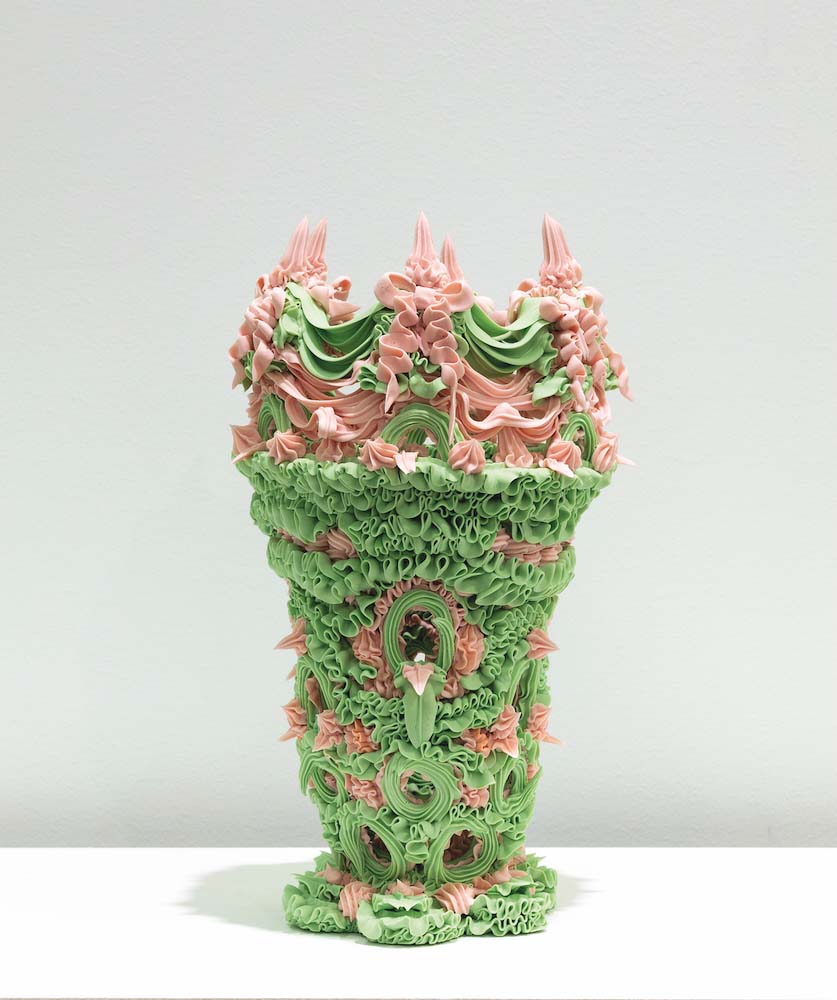
About the Artist
EBONY RUSSELL (b.1980, Melbourne) is an Australian ceramic artist of Maltese and Dutch heritage, based in Sydney. She creates intricate, sculptural ceramic works by piping the material in continuous layers, transforming decoration into architecture and collapsing the boundary between surface and form. Her practice draws on autobiographical memory, gendered aesthetics and domestic craft traditions historically coded as feminine, elevating them through a painstaking, highly original technique. Russell has received international recognition, including awards in Jingdezhen, London, and Australia, and her work has been exhibited globally from Venice to New York and London. Her ceramics celebrate excess, delicacy and pleasure while engaging deeply with the history and possibilities of porcelain.
New Ceramics is a European-based ceramics magazine with international contributions. Purchase a copy online.