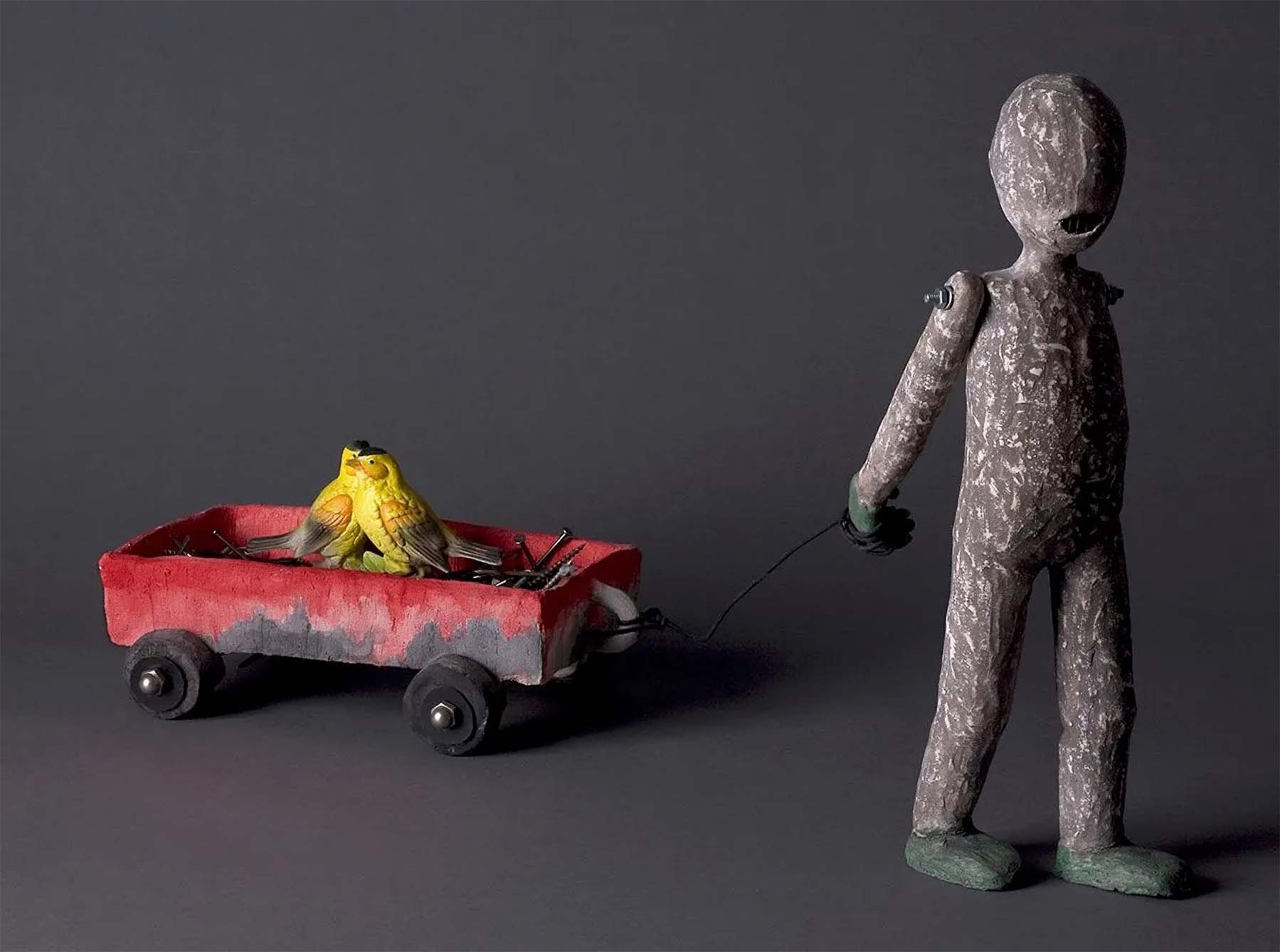

To walk into the studio of Melissa Stern is to enter a psychological playground where the absurdities of daily life are laid bare with both a scalpel and a smile. Working with the resourcefulness of a seasoned handyman and the precision of an alchemist, Stern creates multimedia assemblages that feel instantly familiar yet deeply unsettling. Her figurative sculptures—often lacking a limb, slightly misshapen, or strapped to unseen emotional contraptions—lurch through a world that mirrors our own fragile existence. They are cheerful, standing tall in the face of adversity, caught in a permanent state of delicate emotional and physical equilibrium.
Stern's background in anthropology heavily informs her aesthetic, grounding her work in the textures of non-Western traditions and the raw, unedited impulse of outsider art. Her surfaces are richly drawn and deeply layered, utilizing a vocabulary of disparate materials: encaustic, clay, pastel, and steel. Yet it is her uncanny ability to integrate found objects that elevates her work into a poignant commentary on the human condition. In Stern's hands, a wooden chair leg morphs seamlessly into a clay foot, wire arms extend into the disembodied hands of a vintage mannequin, and shards of broken dolls are resurrected as new heads.
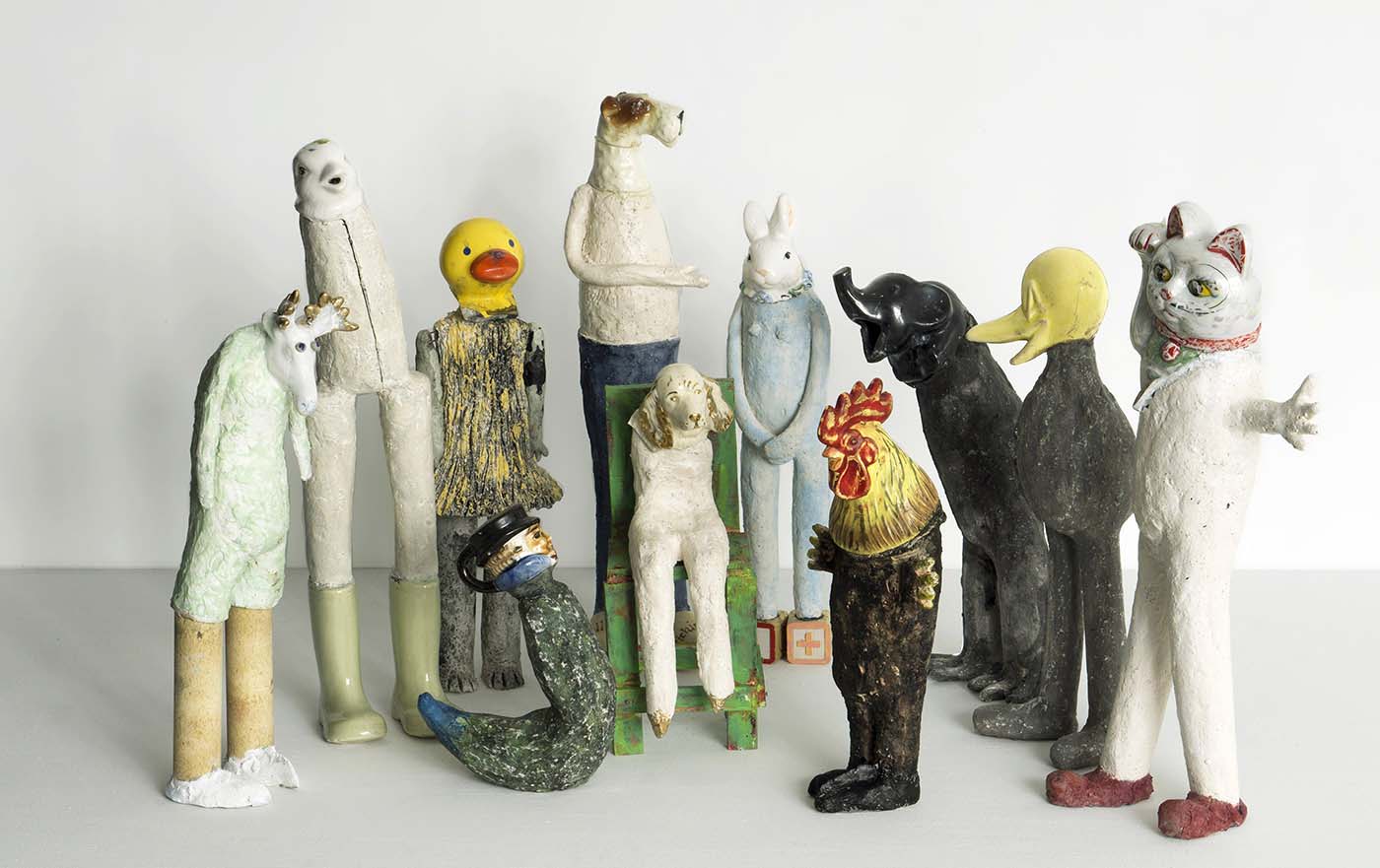
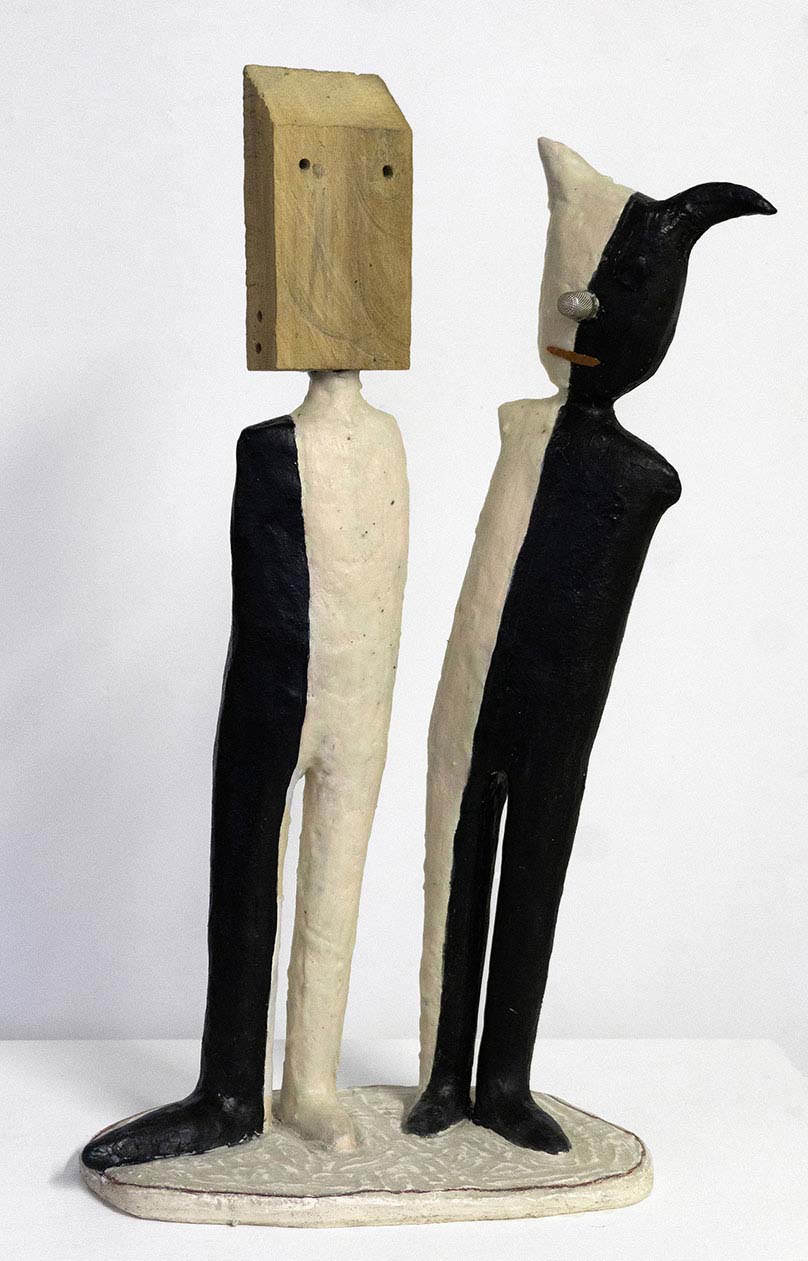
This methodology places Stern in a direct, fruitful dialogue with the history of modern assemblage, most notably the work of Marisol Escobar. Like Marisol, who famously combined blocky wooden figures with drawing, painting, and found elements to critique the nuclear family and societal roles, Stern uses the juxtaposition of unlikely materials to tell complex stories about human relationships.
Whether examining the friction between sisters, the weight of maternal bonds, or the quiet negotiations between husbands and wives, Stern maps the hidden interstices of domestic life.
However, where Marisol often employed a cool, satirical detachment, Stern leans into narrative imagery that owes a conceptual debt to the surrealism of Salvador Dalí. Stern's figures inhabit a subconscious dreamscape where logic is suspended to reveal a deeper emotional reality. Unlike Dalí's surrealism of grand, melting vistas, Stern's is intimate, domestic, and laced with a bittersweet dark humor. Her sculptures act as frozen frames of moments—dreamed, imagined, or nostalgically remembered—operating much like a diary of universal truths.
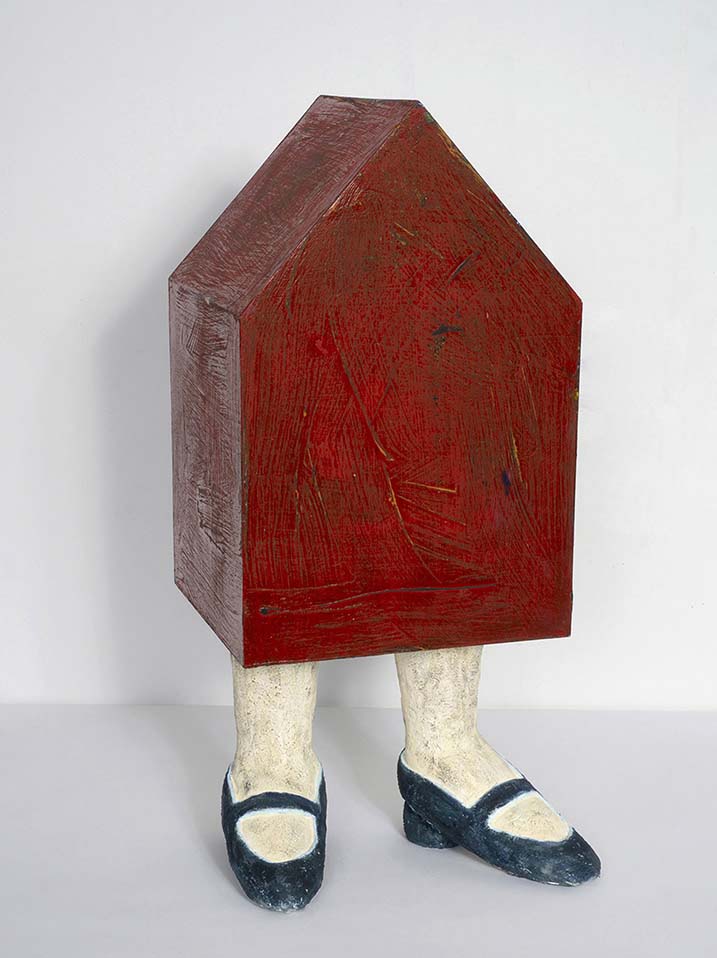
Consider the sculpture Housebound. In this arresting piece, an entire house encases a human torso, with only a pair of bare legs poking out from beneath the foundation, straining to hold up the structure. It is a brilliant, tragicomic metaphor for domestic imprisonment, evoking the crushing weight of endless upkeep, repetitive chores, or perhaps the collective agoraphobia of the pandemic era.
Stern transforms a common anxiety into a visceral reality, forcing the viewer to confront the literal burden of home.
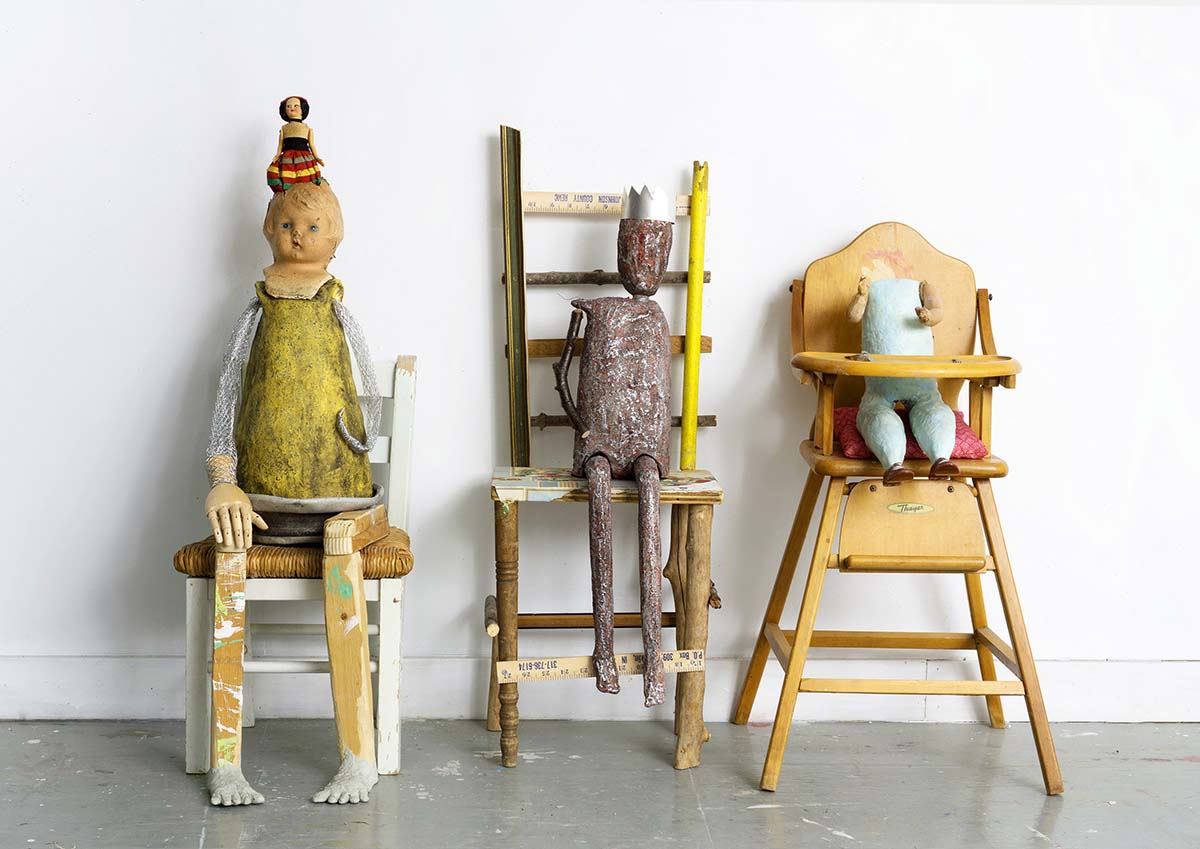
Similarly, Waiting Room presents a man, woman, and child seated patiently on reconstructed found chairs. They are suspended in an existential pause, waiting perhaps for a routine appointment or, more metaphorically, for a resolution that may never arrive. The tableau echoes the theatrical absurdity of Samuel Beckett's Waiting for Godot, capturing the quiet desperation and profound tenderness that coexist within family structures during moments of collective uncertainty.
By distorting the human figure, Stern joins a contemporary lineage of artists who use anatomical manipulation to challenge our definitions of normalcy. While her peers might push these distortions toward the grotesque or the mythological—such as Kathy Ruttenberg's fantastical, animal-hybrid wonderlands—Stern maintains an alluring simplicity. Her figures are childlike and goofy, an emotional Trojan horse. The initial whimsy of the work invites us in, only to disarm us with an undercurrent of past hurts, misunderstandings, and vulnerabilities.
Stern's work is a celebration of what she calls "the ultimate triumph of ridiculous human life." Her figures remind us that we are all weirdly engineered creatures—large, heavy torsos balanced precariously on two funny little feet, lurching through a fractured social condition while trying desperately to stay upright. In a contemporary art landscape that often favors cynical detachment, Stern's assemblages offer something far rarer: a darkly funny, profoundly endearing mirror held up to our shared, beautifully fragmented lives.
Visit Melissa Stern's websiteto learn more about the artist, and 68 Prince Street Galleryfor more information about her solo exhibition Some Assembly Required.