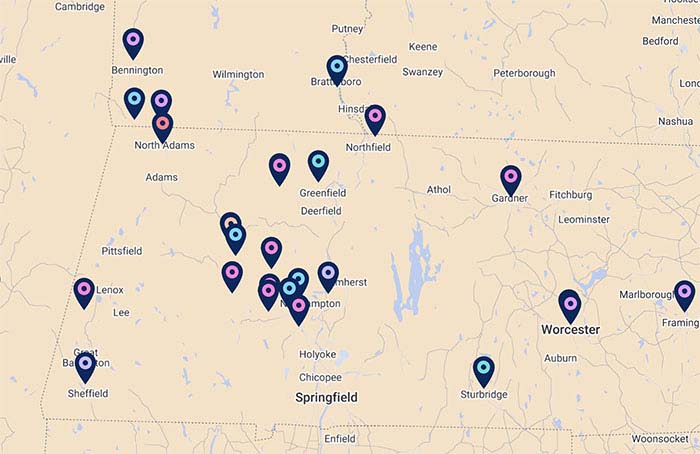
To see all the destinations listed in this guide and other ceramic sites in the US, check out CERAMIC WORLD DESTINATIONS (CWD), MoCA/NY's interactive map listing over 4,000 ceramic destinations!
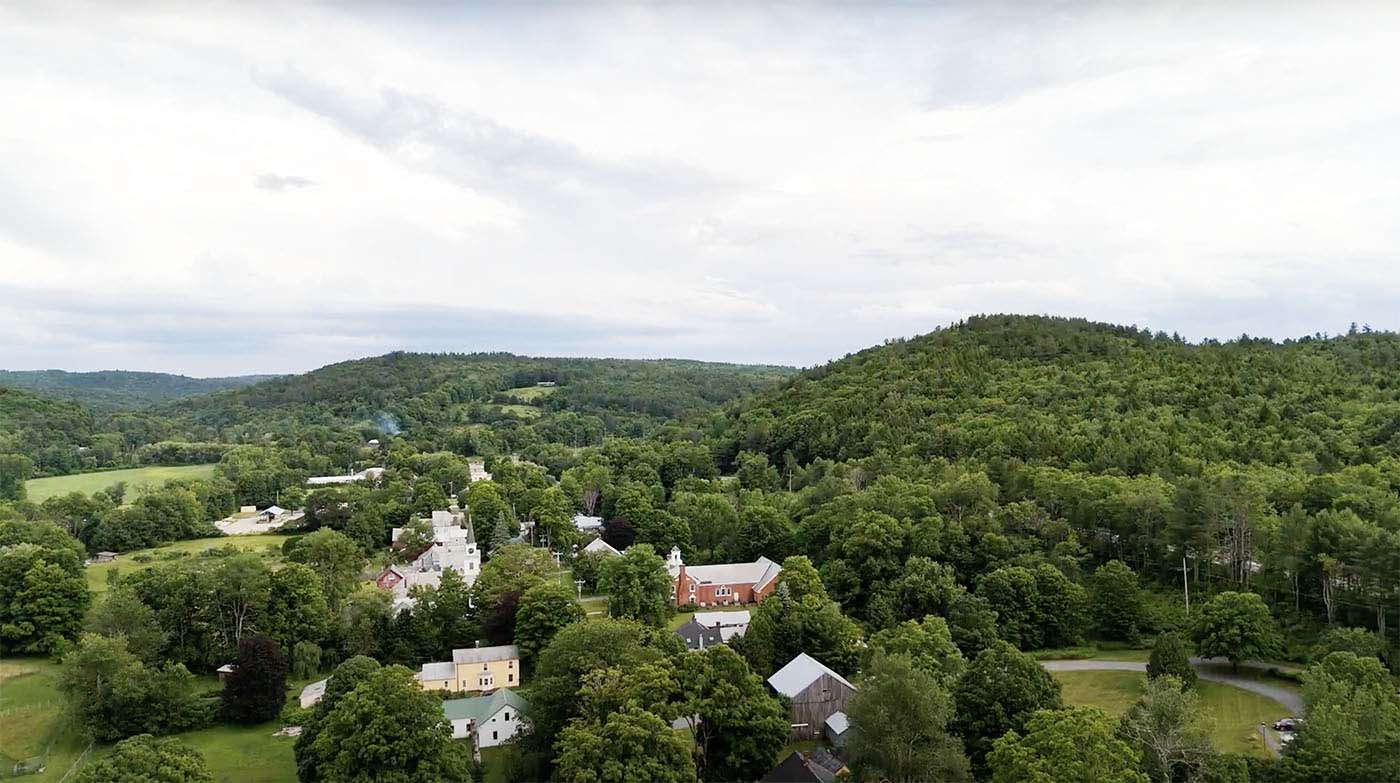
Western Massachusetts reveals itself slowly. The region stretches from the Connecticut River Valley through the rural Hilltowns and into the Berkshires, across wooded roads, former mill towns, college campuses, farms, museums, and working studios. Its creative life is not concentrated in one neighborhood or arts district. Instead, it unfolds across the landscape, connected by the roads between towns and by generations of artists who have chosen to make their lives here.
That mix of art, place, and community appears throughout the region: at Project Art in Cummington, a nineteenth-century mill site on the Westfield River now devoted to contemporary ceramic art; at the Montague Bookmill, where a historic gristmill overlooking the Sawmill River has become a gathering place for books, food, music, and art; and in pottery studios tucked along country roads, where wood, salt, and soda firings remain part of the rhythm of making.
The ceramic community becomes especially visible during the Asparagus Valley Pottery Trail(usually held in April) and the Hilltown 6 Pottery Tour(held each summer in July) when potters open their studios, and visitors travel from one maker to another. These events offer an unusually direct way to experience ceramics: meeting the artists, seeing where the work is made and fired, and understanding how individual studios belong to a much larger network.
During the nineteenth and early twentieth centuries, Deerfield became an important center of the American Arts and Crafts movement, with makers working across embroidery, weaving, basketry, metalwork, furniture, and other forms of craft.
By the later twentieth century, another generation of artists was drawn to Western Massachusetts for a practical reason: there was room to work. In New England, this overlapped with the broader back-to-the-land movement, as artists and makers left larger cities in search of more space, greater self-sufficiency, and a closer relationship to land and community. Compared with Boston and New York City, Western Massachusetts offered relatively affordable houses, barns, workshops, and land where a studio could grow alongside a home. But artists did not stay for space alone. Potters built kilns, shared firings, taught workshops, took on apprentices, organized studio tours, and exchanged labor, advice, meals, and conversation. Over time, those relationships created something that feels less like a conventional art scene and more like an ecology.
Over three days, you can move between centuries without traveling very far: from historic tablewares at Deerfield to contemporary installations at MASS MoCA; from European porcelain at the Clark to working pottery studios in the Hilltowns; and from museum collections back to the table, where handmade ceramics continue to hold food, gather people, and become part of everyday life.
This 72-hour guide follows that living ceramic landscape through the Hilltowns, Pioneer Valley, and northern Berkshires—from the places where ceramics are preserved and studied to the places where they are made, fired, shared, used, and lived with.
For the most immersive experience, stay in or near Cummington, close to Project Art and several ceramic studios.
For visitors who want to stay closer to MASS MoCA, the Clark Art Institute, and the northern Berkshires, lodging options are available throughout North Adams, Williamstown, Pittsfield, and the surrounding towns. Choices range from historic inns and independent hotels to motels, vacation rentals, and more luxurious stays. The Berkshires offer such a wide range of accommodations that it is more useful to explore current options through the regional tourism bureaurather than recommend only a handful of properties.
Northampton is a good base for visitors who want to stay close to restaurants, shops, live music, and the Five College area. Staying in Northampton works especially well after Day One, allowing visitors to end the evening downtown before continuing north toward the Berkshires the following day. Options include:
Driving is strongly recommended for this itinerary. Western Massachusetts is largely rural, with many museums, studios, historic sites, and small towns spread throughout the region. Public transportation between these destinations is limited, so visitors flying into the region should plan to rent a car at the airport whenever possible.
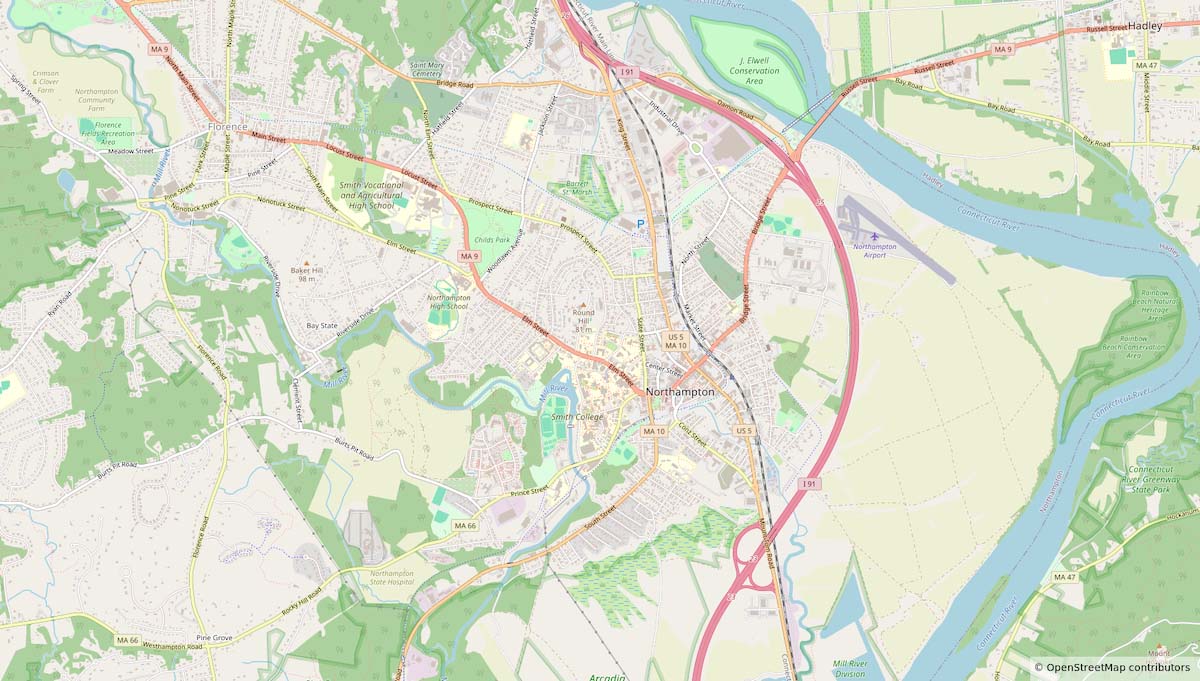
Visitors traveling from New York City or Boston by Amtrak or Peter Pan Bus can also rent a car after arriving in the Pioneer Valley. Enterprise is a local rental option for travelers beginning their road trip from Northampton; reserving in advance is recommended. The drives themselves are part of the experience, passing forests, farms, rivers, old mills, and small towns along the way.
Many ceramic artists work from private studios rather than regularly staffed galleries. Visitors interested in meeting artists or seeing working studios can refer to the Field Guide to Ceramics in Western Massachusetts. Plan ahead and contact artists directly for appointments.
Visitors can also time their trip around one of the region’s annual pottery tours. The Fall Hilltown Open Studio Tour(October 3–4, 2026) features nine ceramic artists and additional makers throughout the Hilltowns, making it an especially good weekend for visitors who want studio visits to play a larger role in their 72 hours.
8 AM: Breakfast at the Old Creamery Co-op
Begin the morning at the Old Creamery Co-op in Cummington. The Creamery offers coffee, breakfast sandwiches, baked goods, groceries, and made-to-order sandwiches that can be packed for the road.
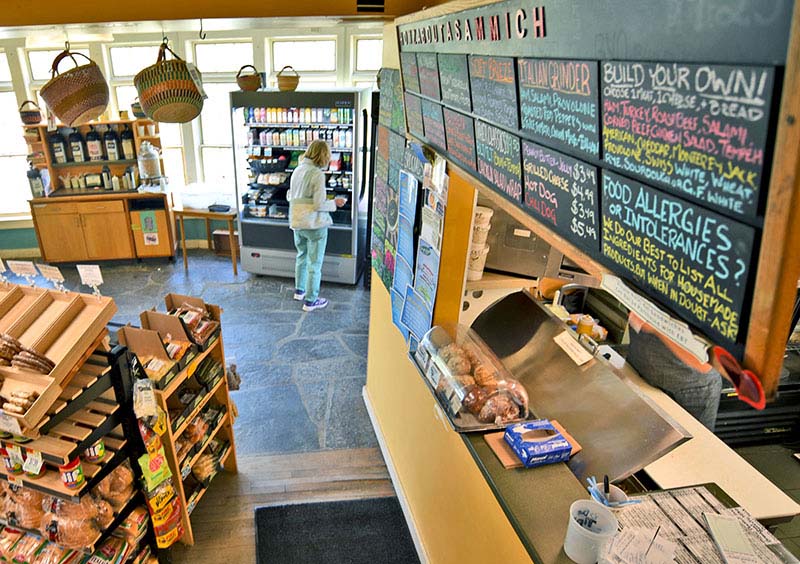
During the summer months, the cold brew is a must-try, and the muffins are baked fresh each day. For something local, look in the refrigerator for the maple syrup yogurt, produced nearby by MacCaGene Creamery, a Hilltown farm.
More than a breakfast stop, it supports local farms and producers and features a dedicated selection of books by local writers and an ever-changing display of work by area potters, bringing the work of nearby artists into everyday community life. It is a small but telling introduction to Western Massachusetts: food, craft, literature, and local relationships sharing the same shelves.
9 AM: Visit Project Art
Begin the day with a visit to Project Artin Cummington. With advance notice, individuals or groups can arrange an introduction to Project Art and Ferrin Contemporary, located on a nineteenth-century former mill site beside the Westfield River. Founded by gallerist Leslie Ferrin and ceramic artist Sergei Isupov, Project Art connects an international network of artists, collectors, scholars, and curators with the deeply rooted ceramic community of Western Massachusetts.
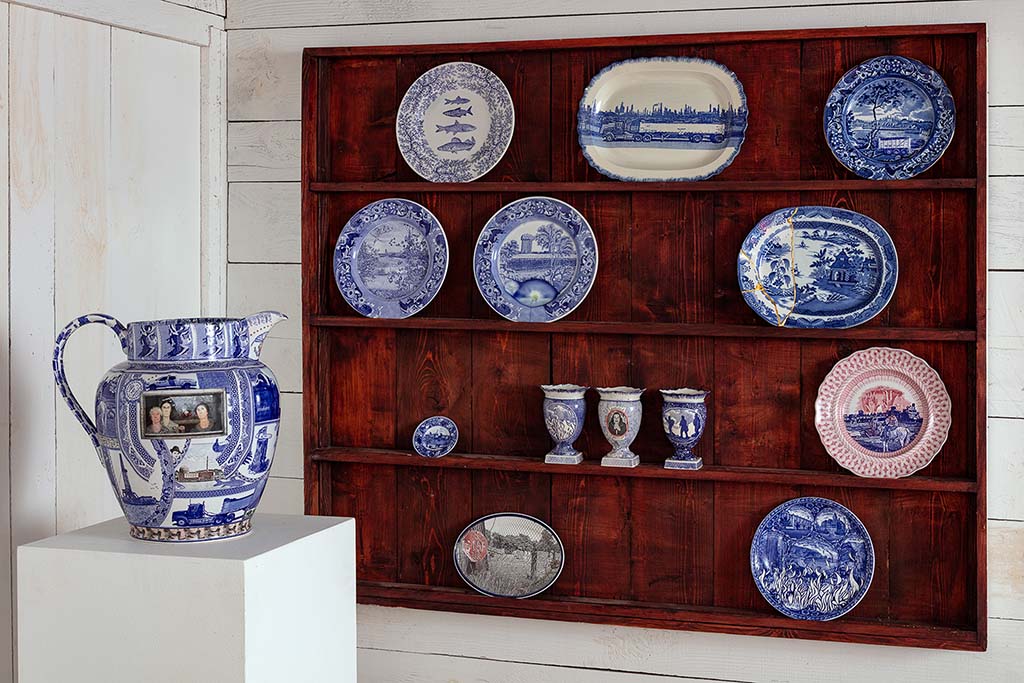
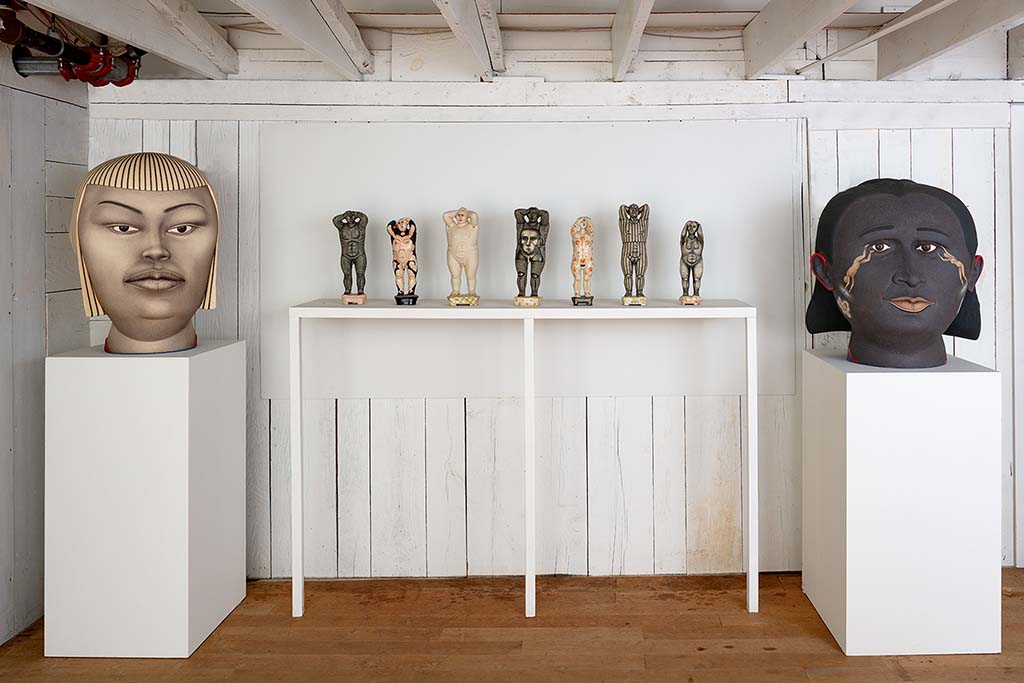
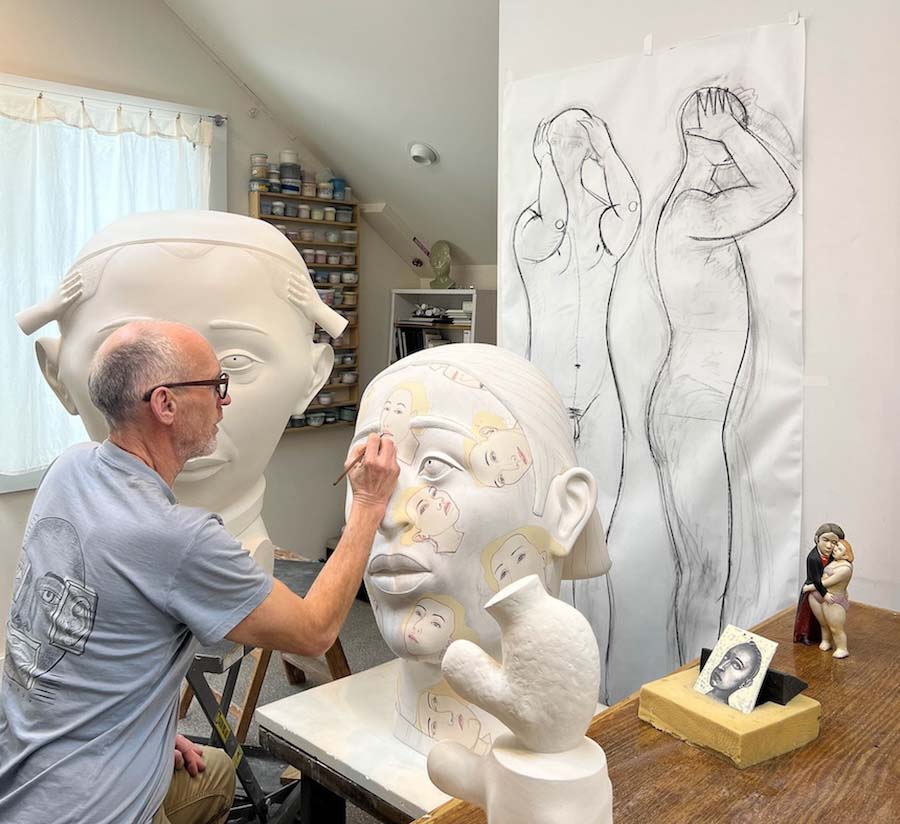
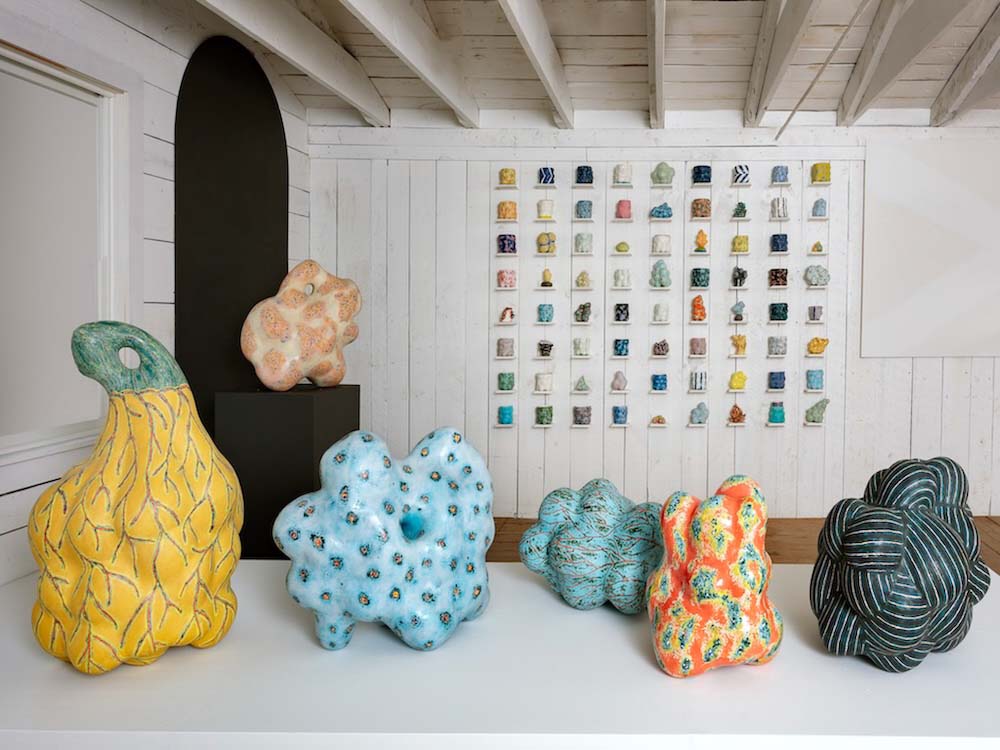
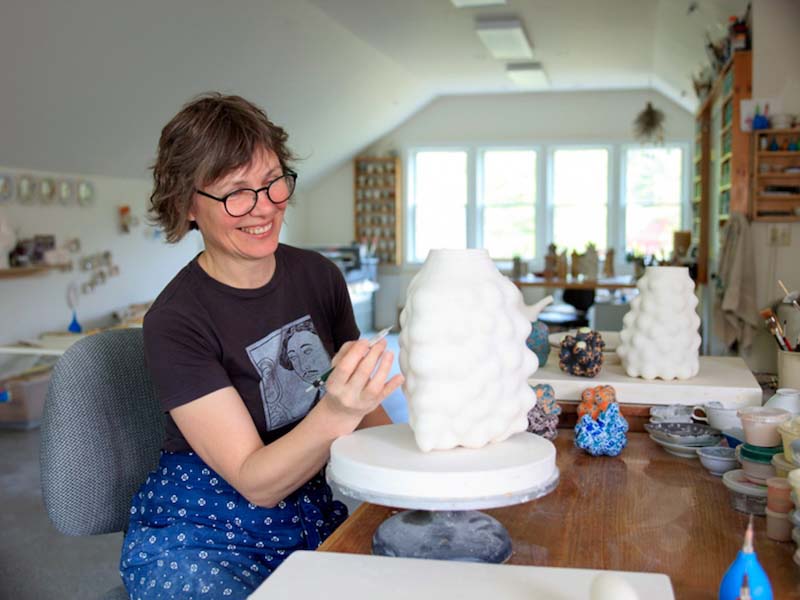
The building houses studios, exhibitions, a library, research projects, residencies, and public programming centered on contemporary ceramic art. Depending on availability, visitors may also have the opportunity to meet resident artists Sergei Isupov and Kadri Pärnamets and see their working studios.
Project Art extends into gardens and shared spaces used for gatherings and meals. Here, ceramics return naturally to the table, where handmade pottery and fine porcelain may be used side by side—part of hospitality, conversation, food, and daily life.
NOTE: Plan ahead and contact Project Art in advance, as visits are by appointment unless a public program or open house is scheduled.
10:30 AM: Drive to Stonepool Pottery
From Project Art, drive approximately 9 miles to Stonepool Pottery in Worthington. The drive takes about 20 minutes, winding through forested roads, farms, and small town centers. Individual studios are often separated by miles of rural landscape, but the artists working here are closely connected through apprenticeships, shared firings, studio tours, friendships, and decades of exchange.
11:00 AM: Studio Visit with Mark Shapiro
With advance notice, individuals or groups may be able to arrange an introduction and behind-the-scenes visit to Mark Shapiro's studio, Stonepool Potteryin Worthington. Since moving to the area in 1986, Shapiro has established a deeply rooted practice combining functional pottery, wood firing, historical research, teaching, writing, and curatorial work. His pots are intended to enter daily life, gathering meaning through use, food, handling, and time.
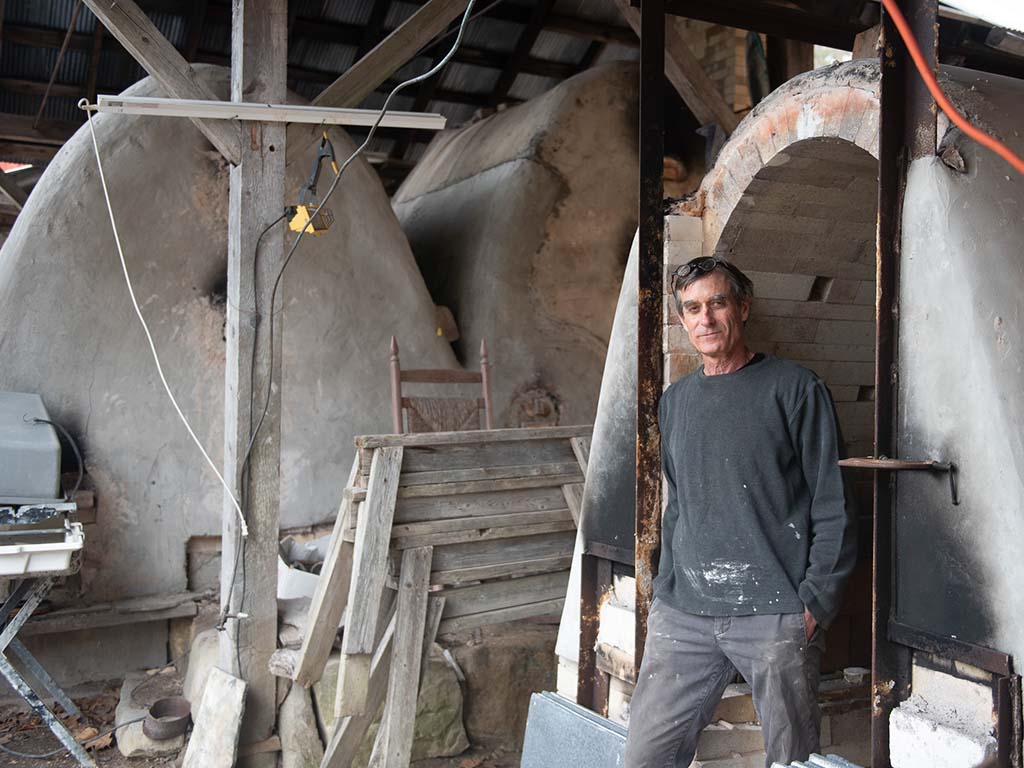
Over the years, Shapiro has trained and mentored apprentices who learned not only the technical demands of the medium but how to build a sustainable life around clay. Several chose to remain in Western Massachusetts after completing their apprenticeships, establishing studios nearby; some later became continuing participants and hosts in the Hilltown 6 Pottery Tour.
A visit to Stonepool offers the opportunity to see Shapiro’s studio, kiln, finished pottery, and the working environment in which this lineage of making and mentorship continues.
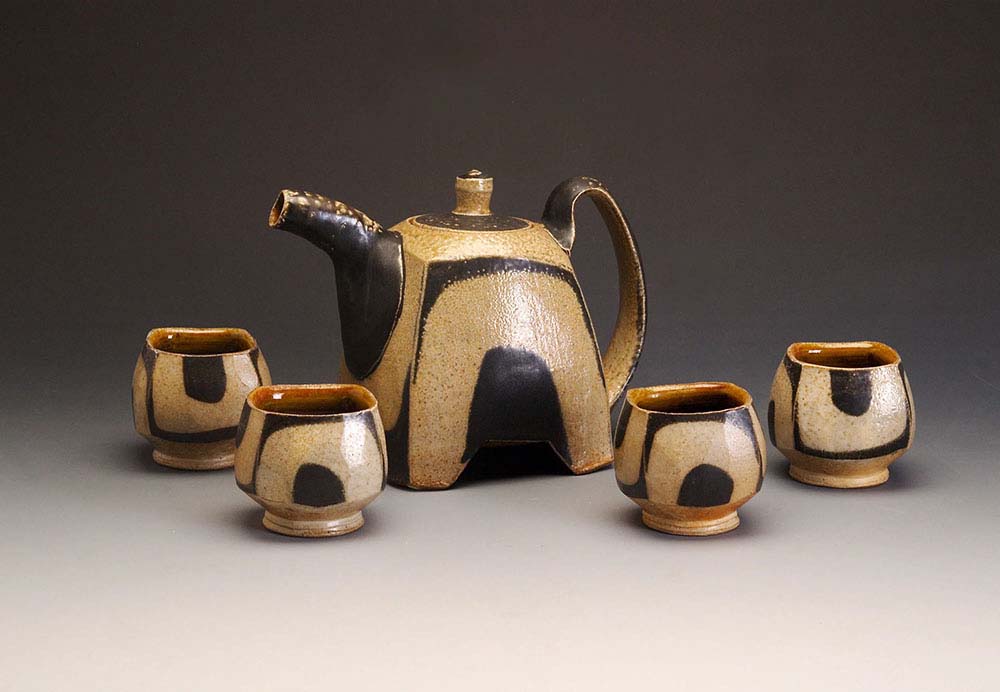
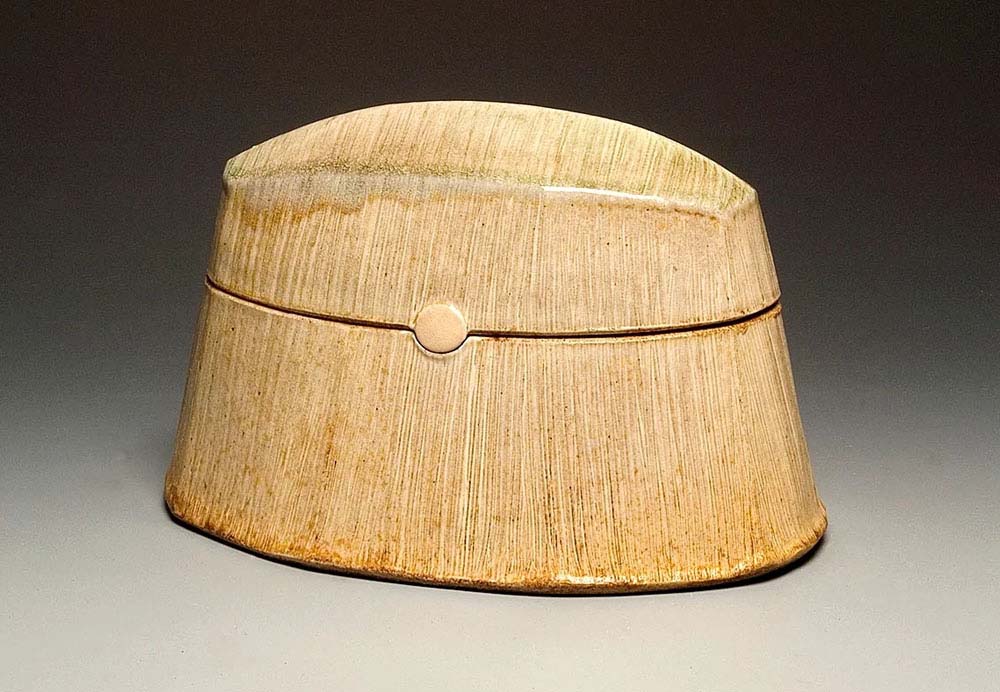
Nearby Studio Visits: Hilltowns
A founding member of the Hilltown 6 Pottery Tour, Taylor makes functional wood-fired pottery from his home studio at Dog Bar Pottery.His studio and gallery are open by appointment and during scheduled events. Taylor’s connection to the area reaches back to his early work with Mark Shapiro, including helping build and fire a wood kiln at Stonepool.
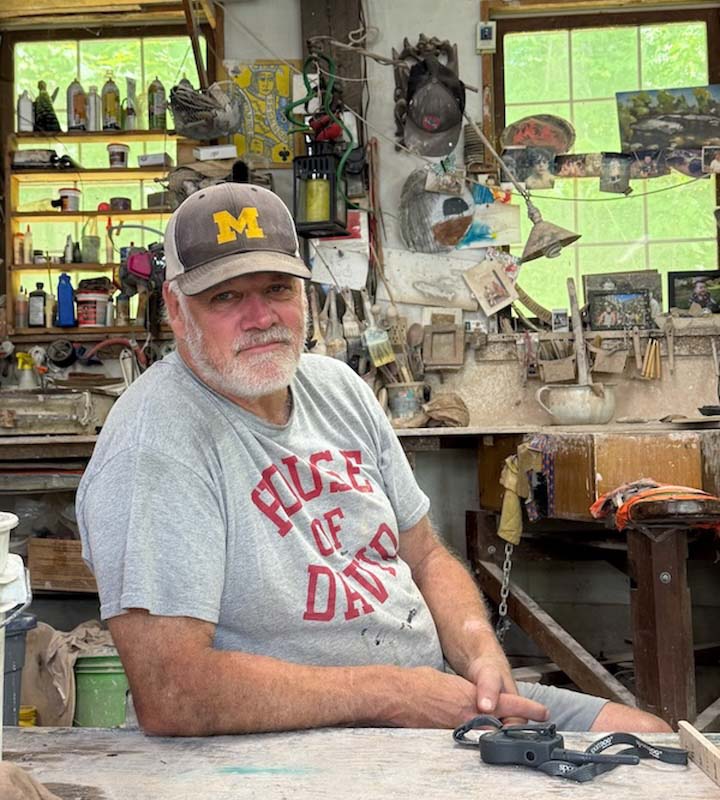
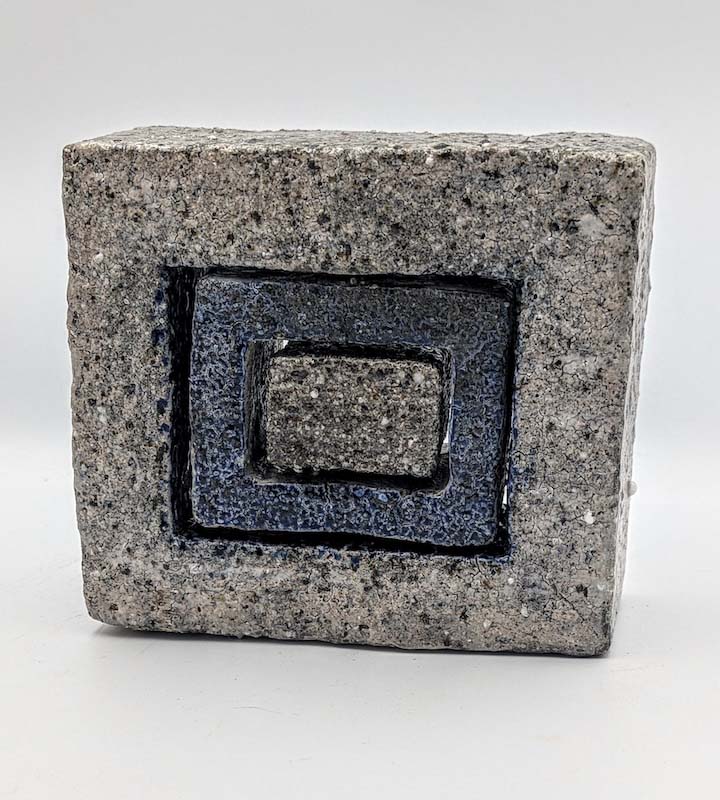
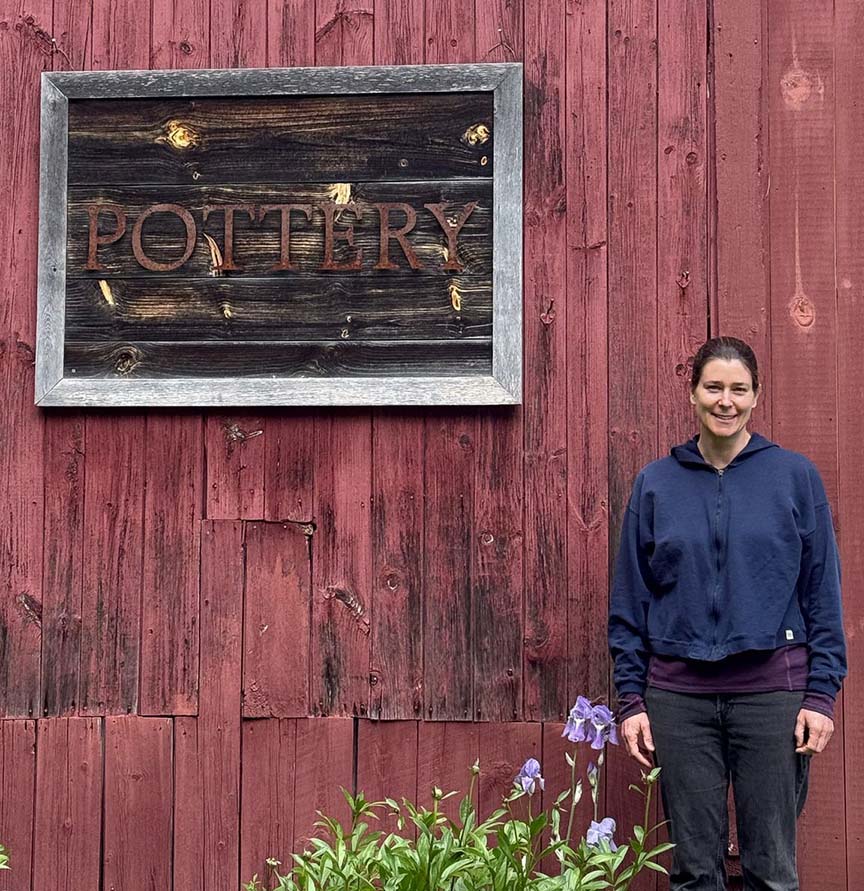
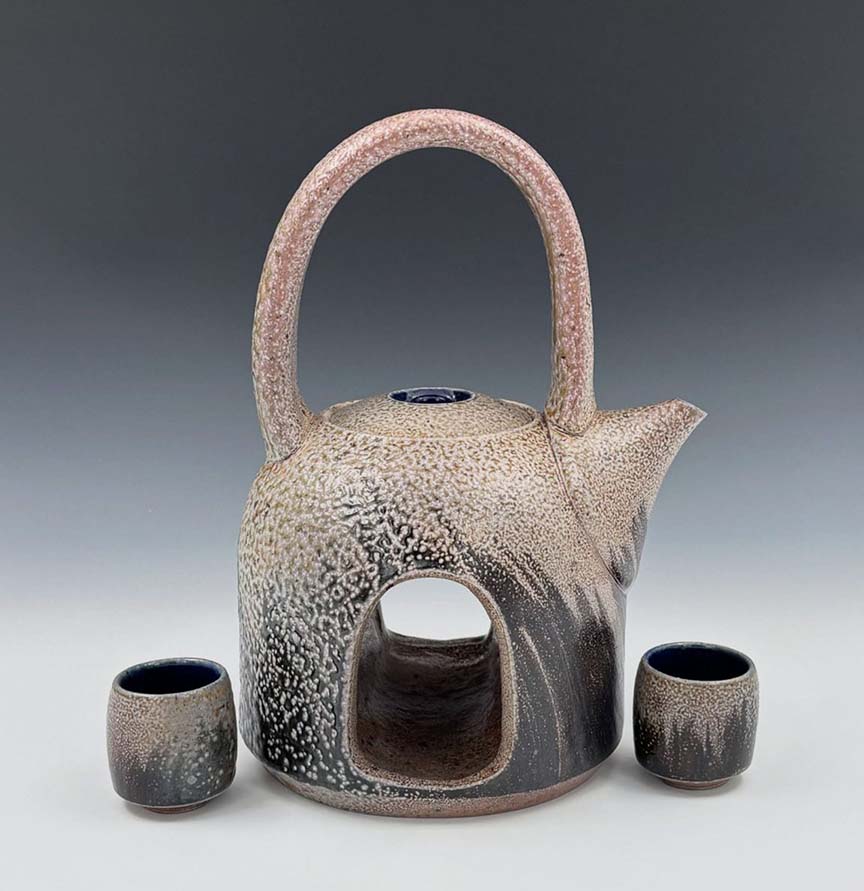
Machinmakes functional, high-fired, wood-fired ceramics from her barn studio in Ashfield. A former apprentice of Mark Shapiro, she is now a host artist with the Hilltown 6 Pottery Tour. Her studio is currently listed as open during community events; visitors interested in a separate visit should contact her in advance.
1:30 p.m. — Lunch in Amherst
From Stonepool Pottery, drive approximately 28 miles east to Amherst. The drive takes about one hour, moving from the rural Hilltowns into a college town shaped by museums, archives, literature, historic homes, teaching collections, and the Five College network. Stop for lunch in downtown Amherst before beginning the afternoon’s museum visits. For a filling lunch, consider Lao Hu Tong on Main Street, a restaurant whose menu includes steamed buns, xiao long bao, noodles, and other regional Chinese dishes. Allow enough time for your reserved afternoon tour at the Emily Dickinson Museum.
2:30 PM: Emily Dickinson Museum
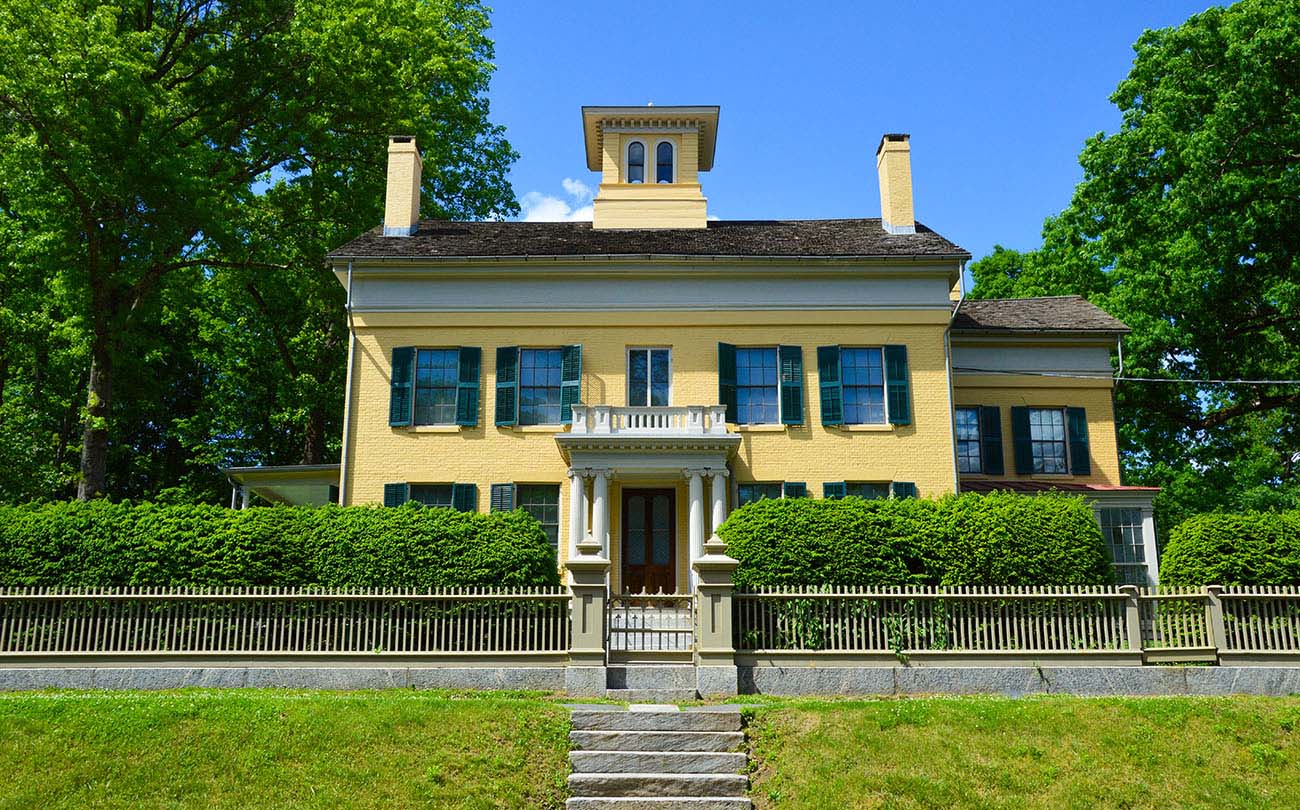
Visit the Emily Dickinson Museum,which includes the Homestead, where Dickinson (one of America's greatest poets) was born and lived for most of her life, and The Evergreens, the neighboring home of her brother Austin and his family.
At the museum, her world can be encountered through the furniture, tableware, and everyday objects that surrounded the Dickinson family.
Furniture, textiles, ceramics, silver, cooking utensils, artwork, and other household objects help reconstruct the rhythms of dining, entertaining, writing, and family life. Locally made redware and stoneware are displayed alongside English ceramics, Chinese export porcelain, transfer-printed wares, and other imported tablewares, connecting nineteenth-century Amherst households to broader systems of trade, taste, class, and social presentation.
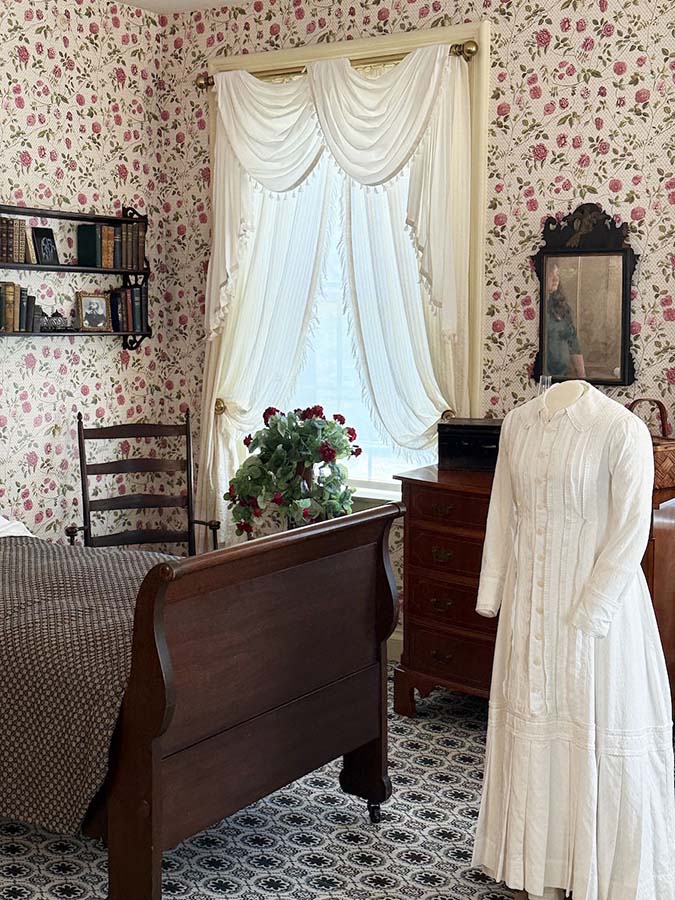
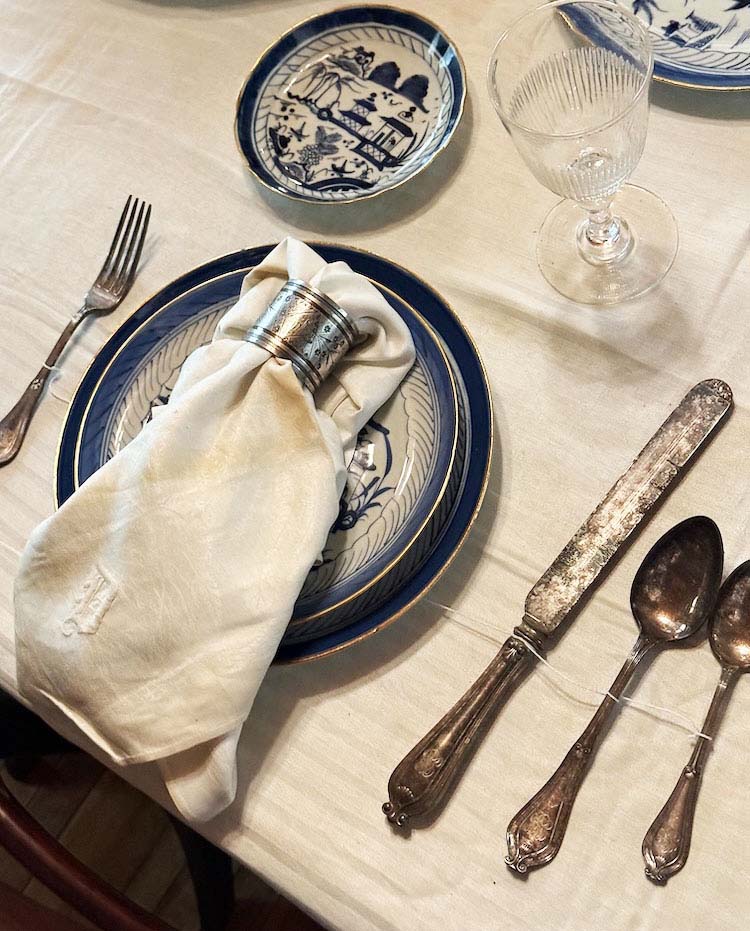
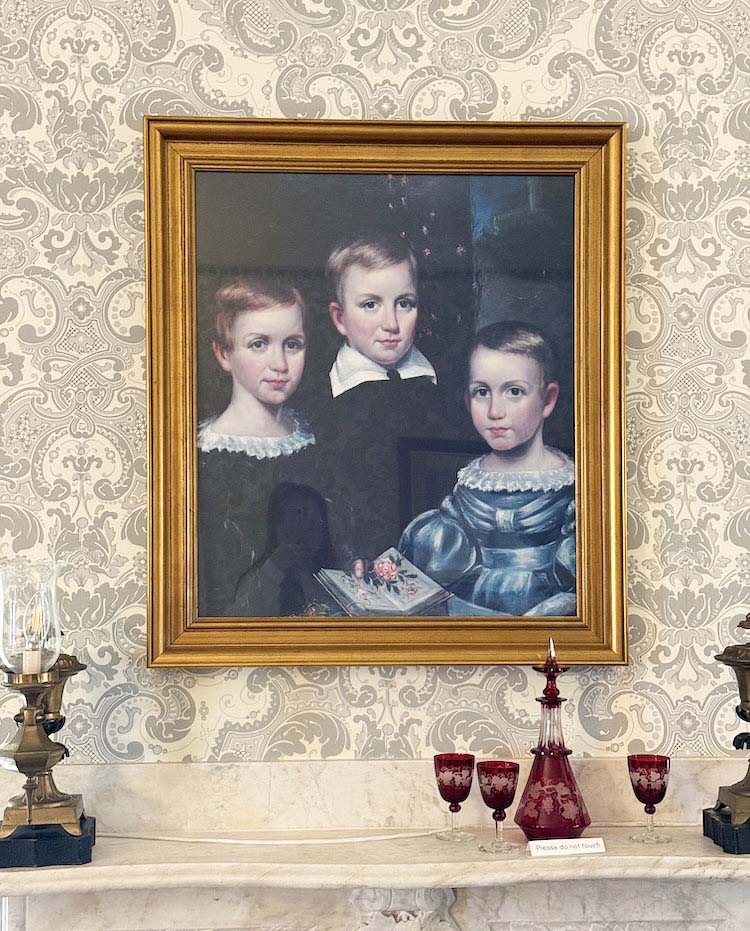
3:30 PM: Smith College Museum of Art
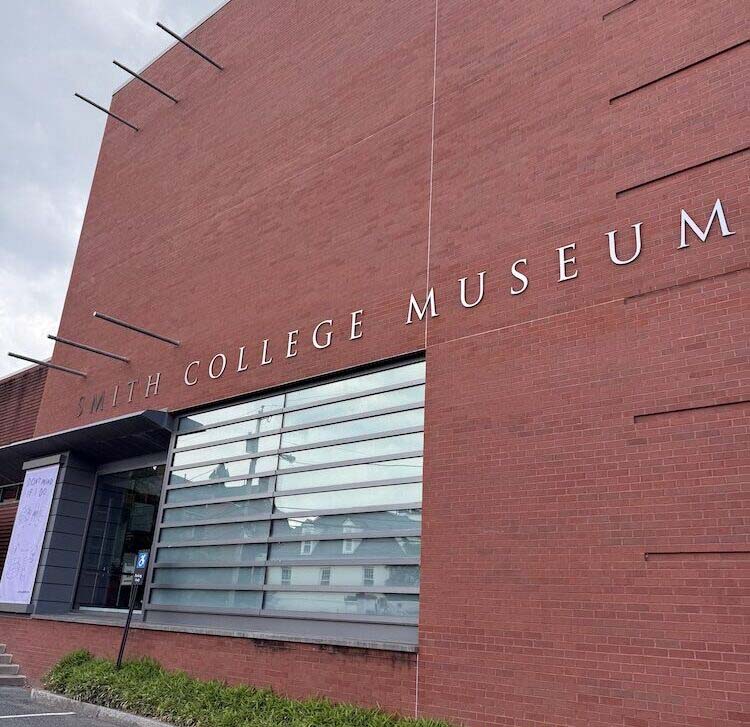
Western Massachusetts’ academic museums are an important resource for ceramics, although no single campus is devoted exclusively to the medium. Smith College, Mount Holyoke College, and Amherst College all hold growing ceramic collections, with clay appearing alongside painting, sculpture, decorative arts, archaeology, and material culture from around the world. Because these teaching collections rotate regularly, the best way to plan your visit is to explore the Five College Collections databasein advance.
For this itinerary, Smith College Museum of Art is the most practical choice, bringing you directly into Northampton for the evening’s visit to PINCH, dinner, and live music. Admission is free.
5:30 PM: PINCH and Downtown Northampton
Begin the evening at PINCH, an artisan shop and gallery on Main Street featuring handmade pottery, jewelry, homewares, textiles, and work by independent artists.
PINCH began in 1979 as Pinch Pottery, founded by Leslie Ferrin, Mara Superior, and Barbara Walch. Its original home was in Thornes Marketplace, a former department store that became an important incubator for Northampton’s independent shops, restaurants, arts organizations, and creative community during the city’s downtown renaissance of the 1970s. Thornes supported more than small businesses; it also helped nurture arts and culture through organizations such as APE (Associated Potential Enterprises). PINCH is now independently owned by Jena Sujat, and a new generation is carrying that tradition forward.
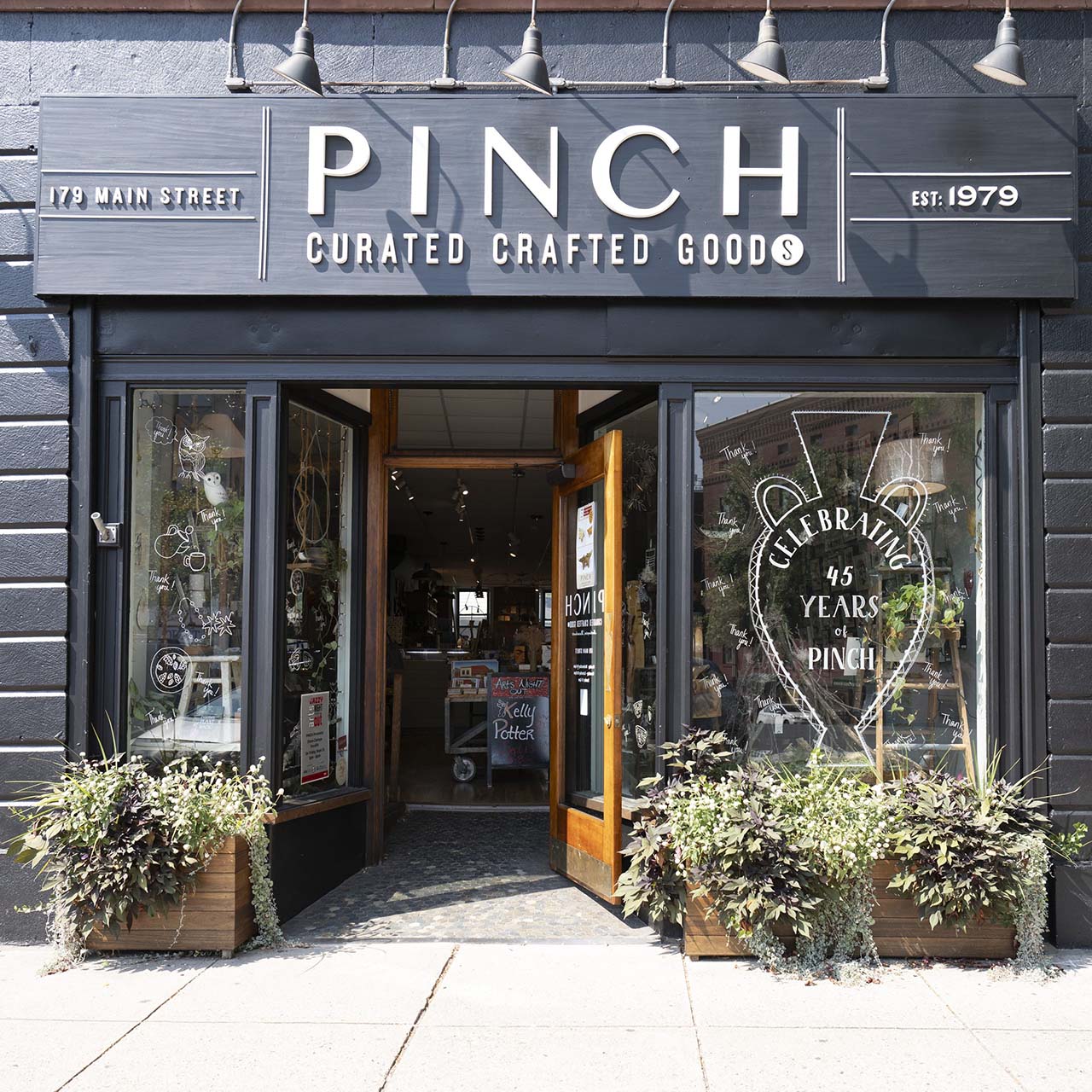
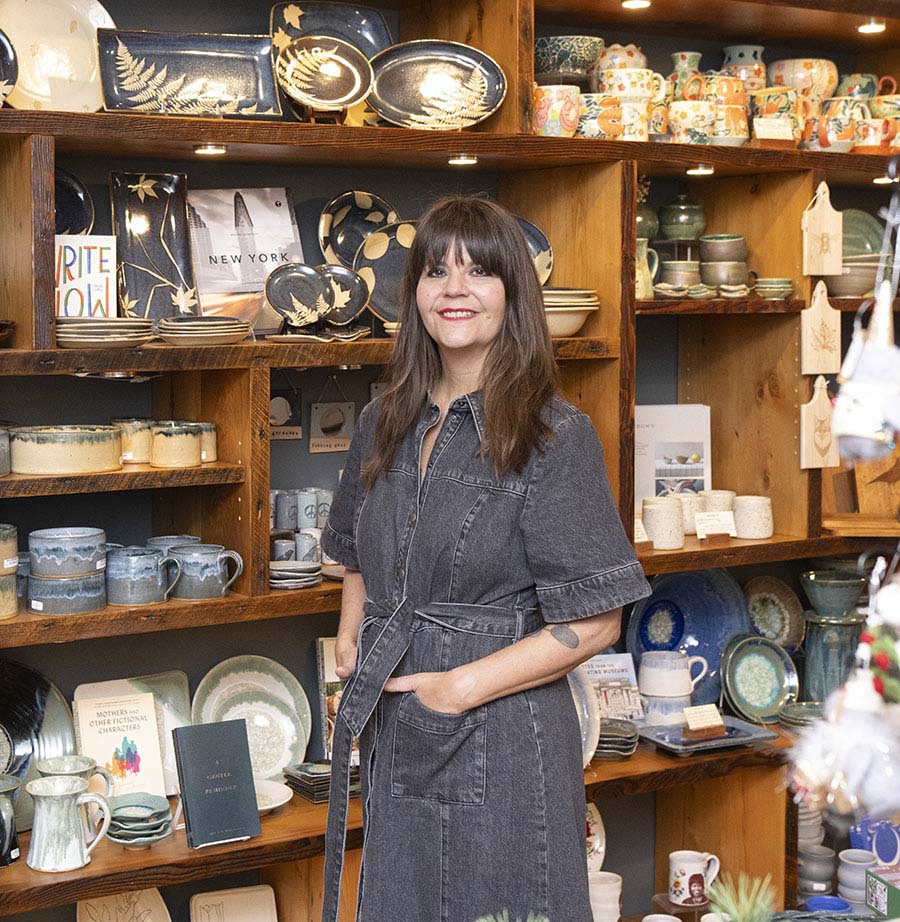
Supporting artists in making a living from their work is central to PINCH. Walk into the shop today and you will still find pottery and handmade objects by artists working throughout the region, including work by original founders Mara Superior and Barbara Walch. The relationship between artists and audiences continues beyond the shelves through public events and artist talks that invite makers into the space to speak about their practices and the work they create.
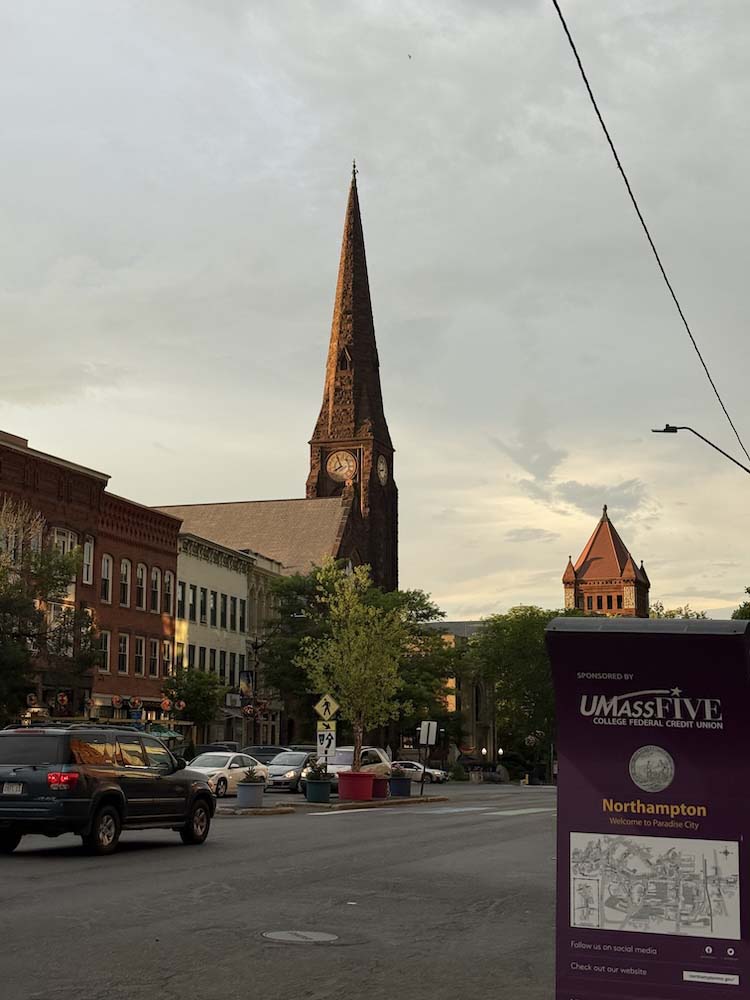
Afterward, spend some time walking through downtown Northampton’s bookstores, shops, cafés, and galleries. Many businesses stay open later for Arts Night Out, held on the second Friday of each month, when galleries, shops, studios, and cultural spaces throughout downtown host exhibitions, performances, and special events.
6:30 PM: Dinner in Northampton
Stay in downtown Northampton for dinner. For a casual meal, head to Tellus & the Satellite Bar in Thornes Marketplace for pizza and a lively evening atmosphere. Another longtime Northampton favorite is Paul & Elizabeth’s, one of the city’s early natural-food restaurants and a fixture at Thornes for decades.
Fun fact: Tellus now occupies the original home of Pinch Pottery, bringing the evening quite literally back to where this chapter of Northampton’s ceramic history began.
Paul & Elizabeth’s was also part of the social world surrounding Pinch. Ceramic artists Karen Karnes and Anne Stannard would stop there to eat while traveling between Vermont and New York, then visit Pinch Pottery, where their work was sold. As the community around Thornes grew, Paul & Elizabeth’s also began selling handmade cookware, including its signature flameware and Karen Karnes’ iconic casseroles.
These overlapping relationships between food, pottery, artists, and independent businesses offer a glimpse into the creative network that took shape in Northampton: a place where makers could sell their work, restaurants could support local craft, and friendships developed through the ordinary rituals of eating, shopping, and gathering.
8:00 PM: Live Music
End the evening with Northampton’s vibrant music and performance scene. On weekends, check the calendars at local theaters, listening rooms, and music venues for touring performers, local bands, folk, jazz, experimental music, or intimate acoustic sets. See what’s happening
Day Two travels north into the Berkshires, where two major museums offer dramatically different ways of encountering art. MASS MoCA unfolds through the vast architecture of a former industrial complex, while the Clark Art Institute presents historical collections within a quieter landscape of reflecting pools, meadows, and wooded trails. Together, they reveal two sides of the region: one shaped by industrial reinvention and contemporary experimentation, the other by collecting, close looking, and contemplation.
Begin the day by making your way to North Adams. Depending on where you are staying in Western Massachusetts, allow approximately one hour for travel to reach the northern Berkshires. The drive passes through small towns, wooded roads, rivers, and former industrial communities before arriving in North Adams, where the morning begins at MASS MoCA.
10 AM: MASS MoCA
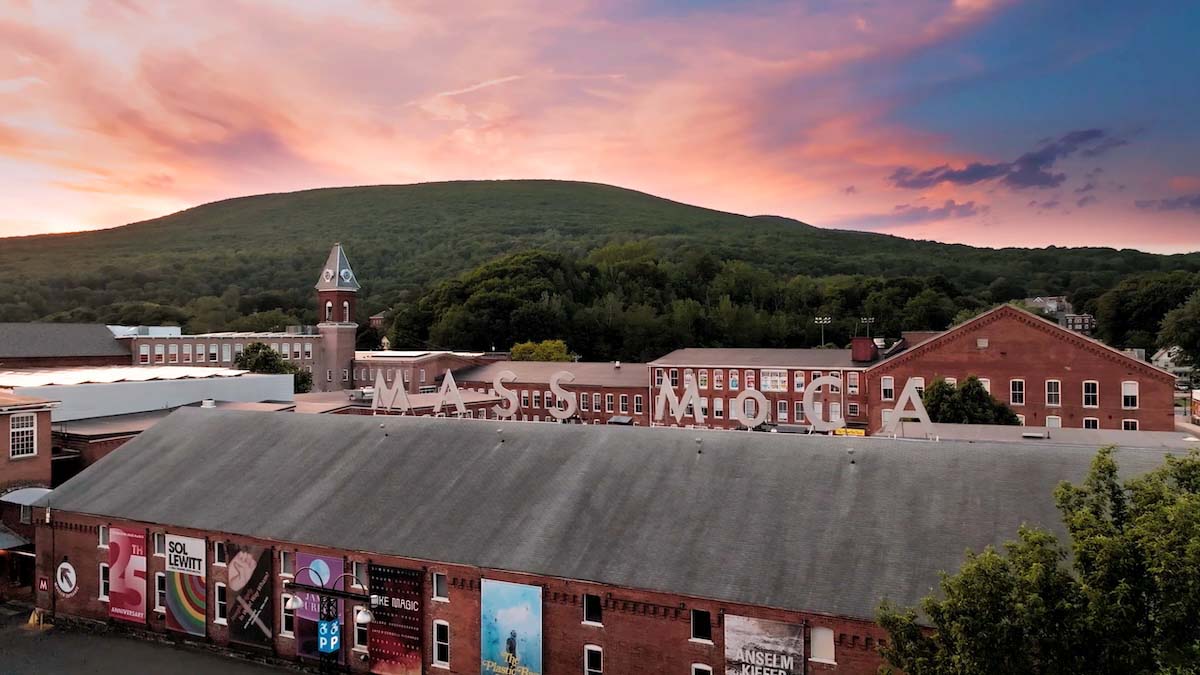
Begin at the Massachusetts Museum of Contemporary Art, better known as MASS MoCA. The museum occupies a sprawling complex of nineteenth-century factory buildings in downtown North Adams. Originally home to Arnold Print Works and later the Sprague Electric Company, the site has been transformed into one of the country’s largest centers for contemporary art. Its brick buildings, courtyards, bridges, tunnels, and immense galleries allow artists to work at a scale rarely possible in conventional museums.
MASS MoCA is not a collecting institution, so ceramics are not presented as a permanent category. Instead, clay appears alongside other materials within the museum’s continuously changing contemporary exhibitions. Because exhibitions are continually changing, check MASS MoCA’scurrent listings before your visit.
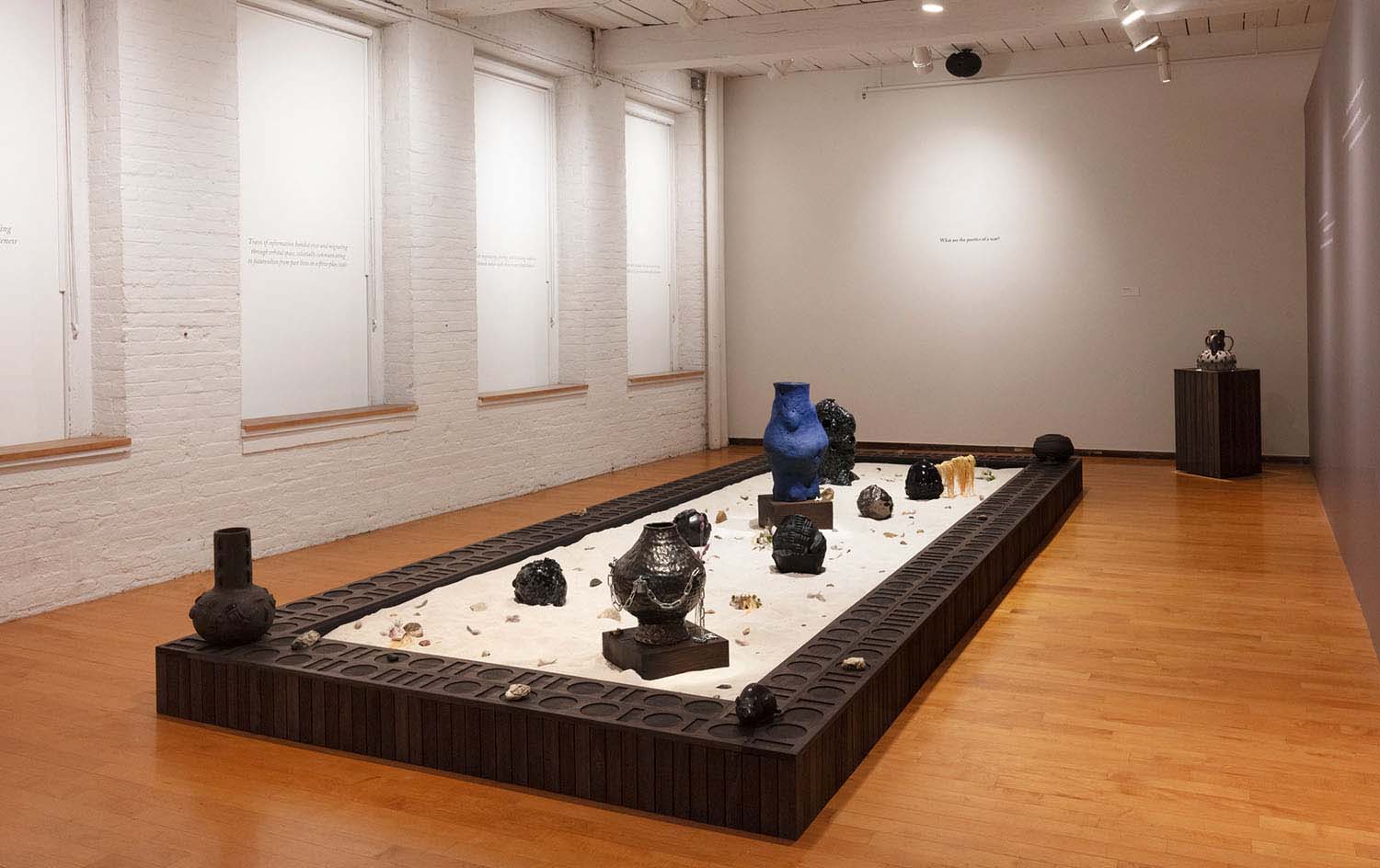
One of its most significant recent presentations devoted to the medium was Ceramics in the Expanded Field, on view from 2021 to 2023
For visitors traveling in 2026, Lola Ayisha Ogbara: Scars Insist on Being Rememberedpresents ceramic works alongside metal, sound, and scent. Ogbara uses porcelain and other materials to explore memory, bodily experience, resistance, and Black diasporic histories. Her Forget-Me-Knot series draws on the visual language of scars, keloids, and scarification.
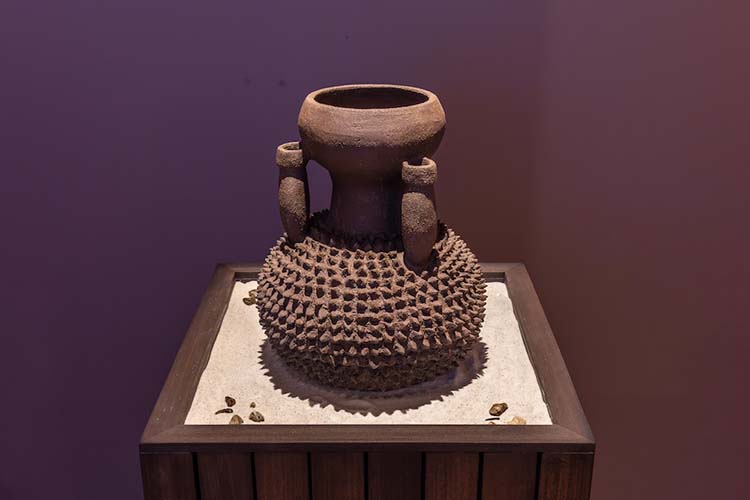
Ceramics also appear in Technologies of Relation,including a collaborative project by Mashinka Firunts Hakopian with Dahlia Elsayed, Andrew Demirjian, and Danny Snelson that draws on the Armenian practice of reading coffee grounds from ceramic cups, connecting an ancestral form of divination with contemporary questions of technology and knowledge. The exhibition remains on view through July 25, 2027.
12:30 PM: Lunch in North Adams
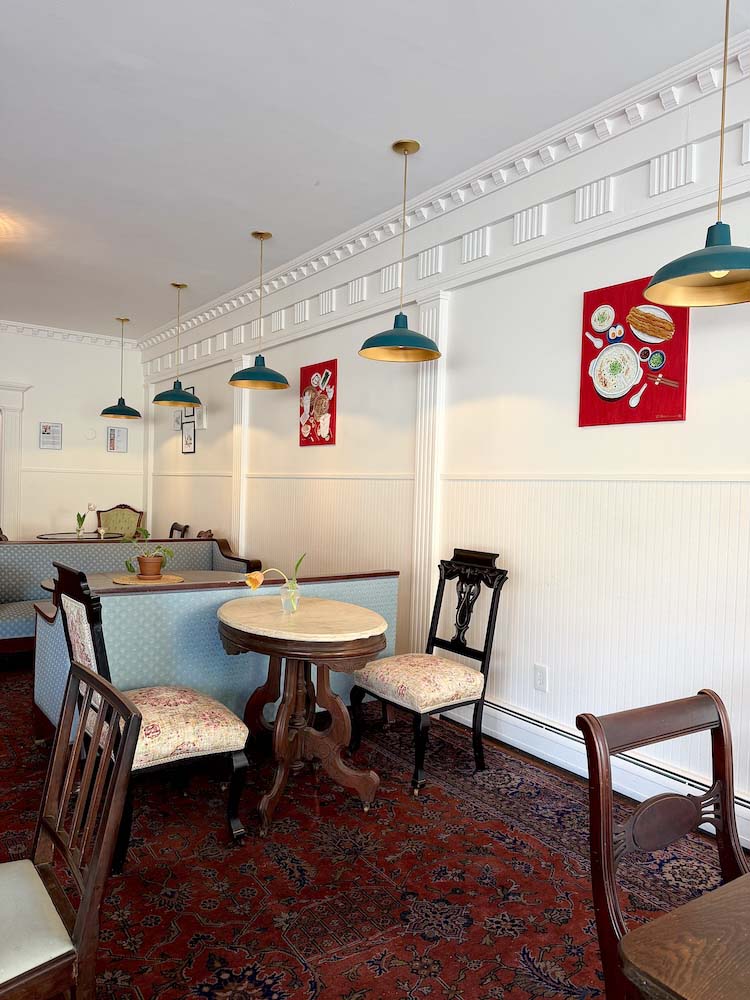
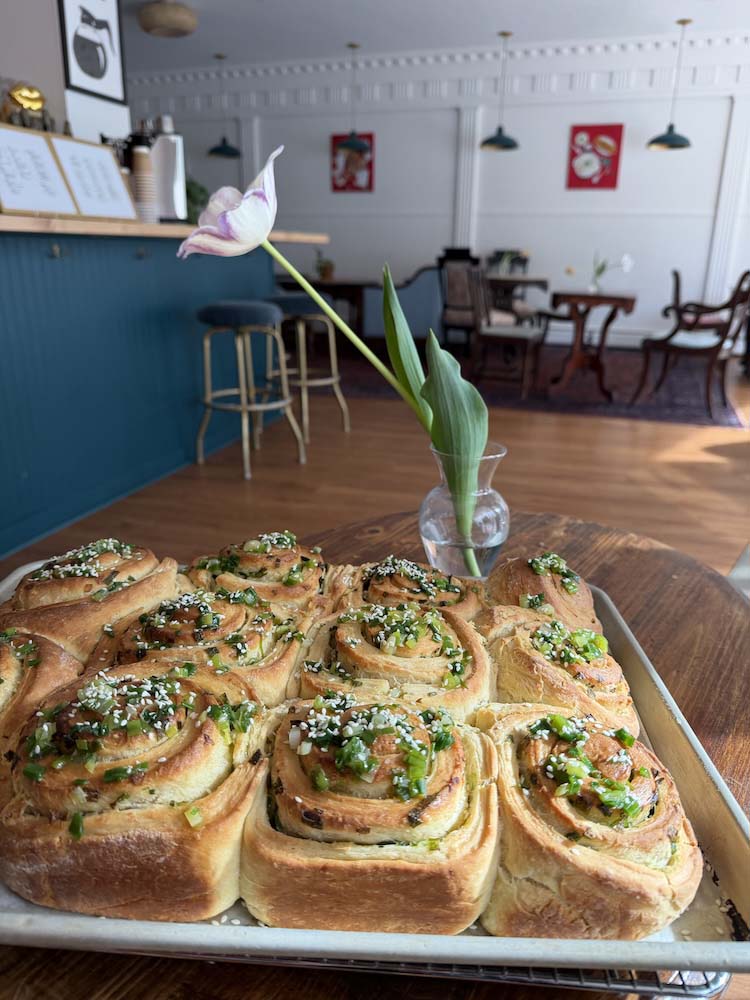
From MASS MoCA, walk about 10 minutes into downtown North Adams for lunch. For a relaxed café stop, head to Steeple City Social, a community-oriented bakery, café, cocktail bar, and shop featuring vintage housewares and ephemera. Just nearby is Jack’s Hot Dog Stand, a longtime North Adams institution with a simple menu and plenty of old-school atmosphere. Both are within easy walking distance of MASS MoCA.
1:30 PM: Drive to Williamstown
From downtown North Adams, continue west toward Williamstown and the Clark Art Institute. The drive takes approximately 15 minutes, moving from North Adams’ brick industrial landscape into the open fields, college campus, and surrounding Berkshire hills of Williamstown.
1:45 PM: The Clark Art Institute
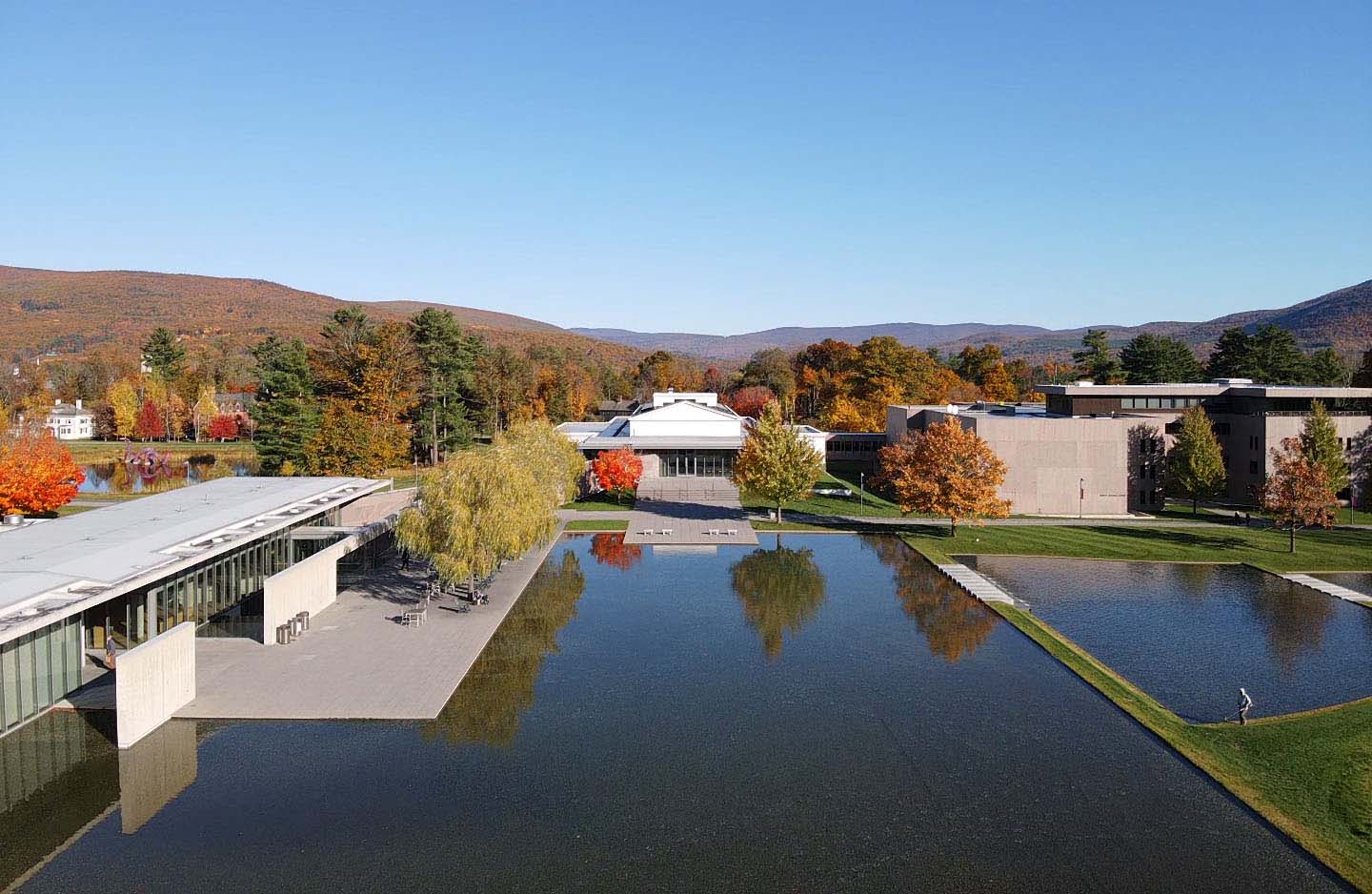
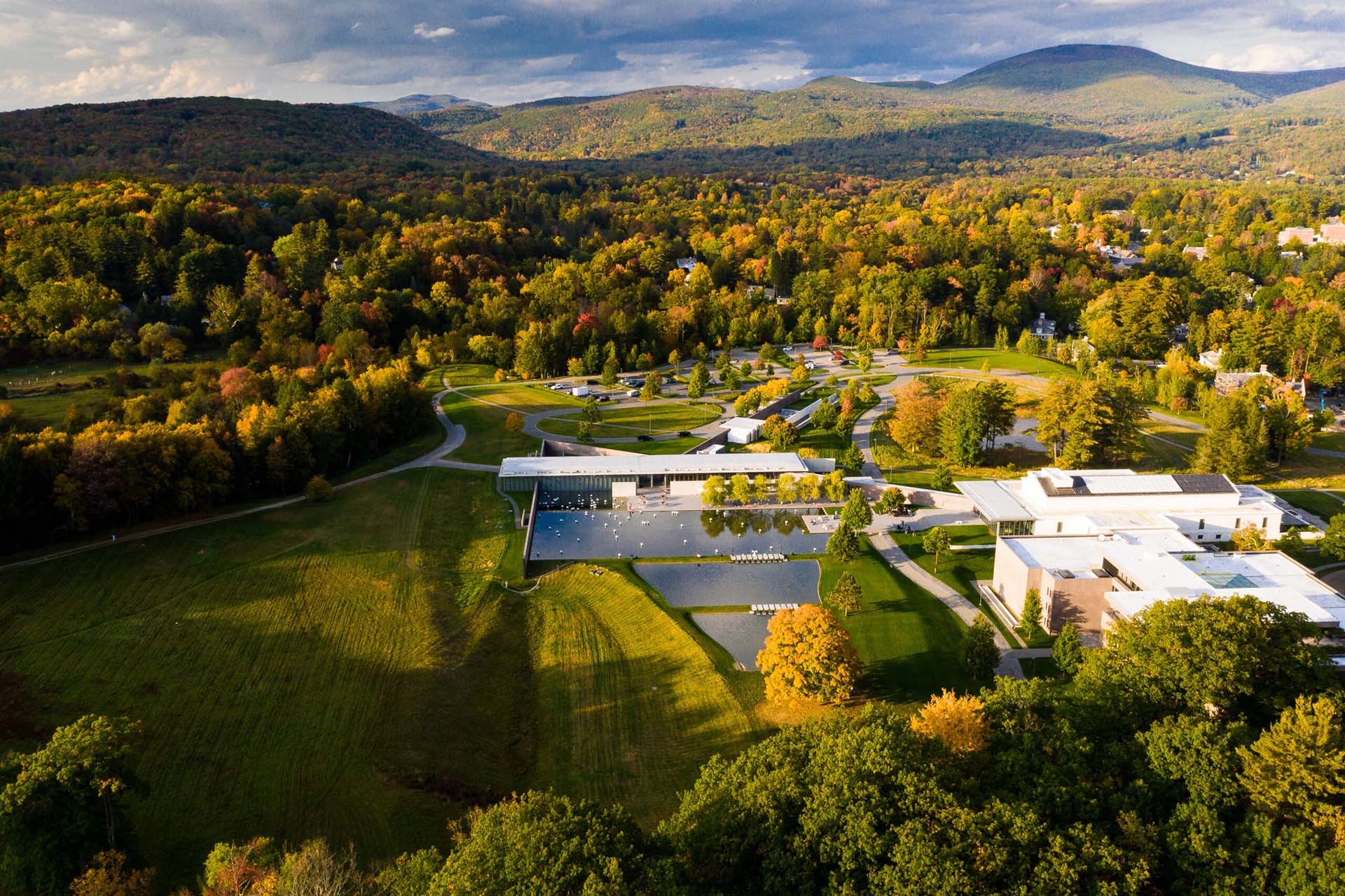
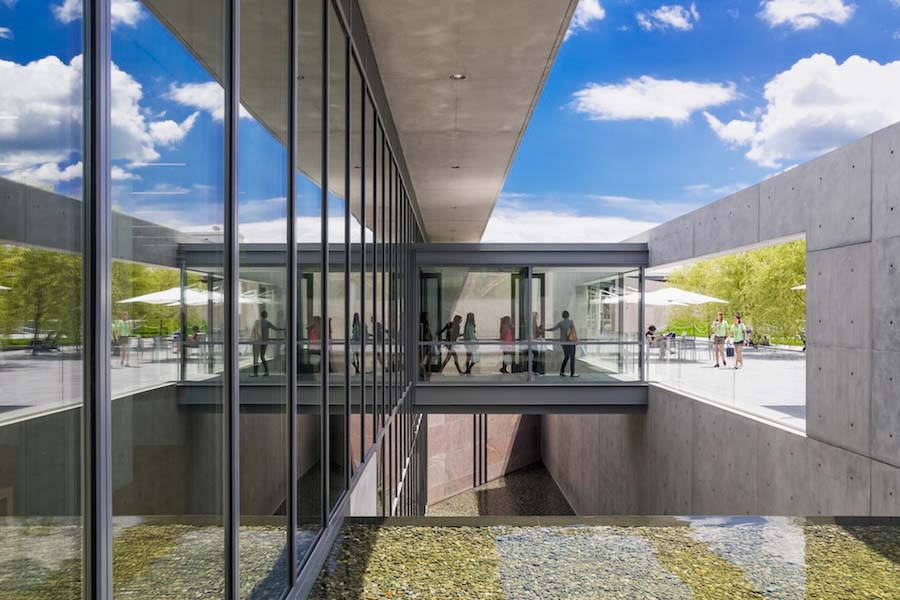
Spend the afternoon at the Clark Art Institute.The galleries are largely historical, and the architecture opens onto reflecting pools, meadows, woods, and the surrounding Berkshire hills. The museum’s collection includes European and American painting, sculpture, prints, drawings, photography, silver, furniture, glass, and decorative arts.
Its ceramic holdings are especially meaningful within this itinerary because porcelain and earthenware appear alongside broader histories of collecting, domestic life, politics, trade, and social identity.
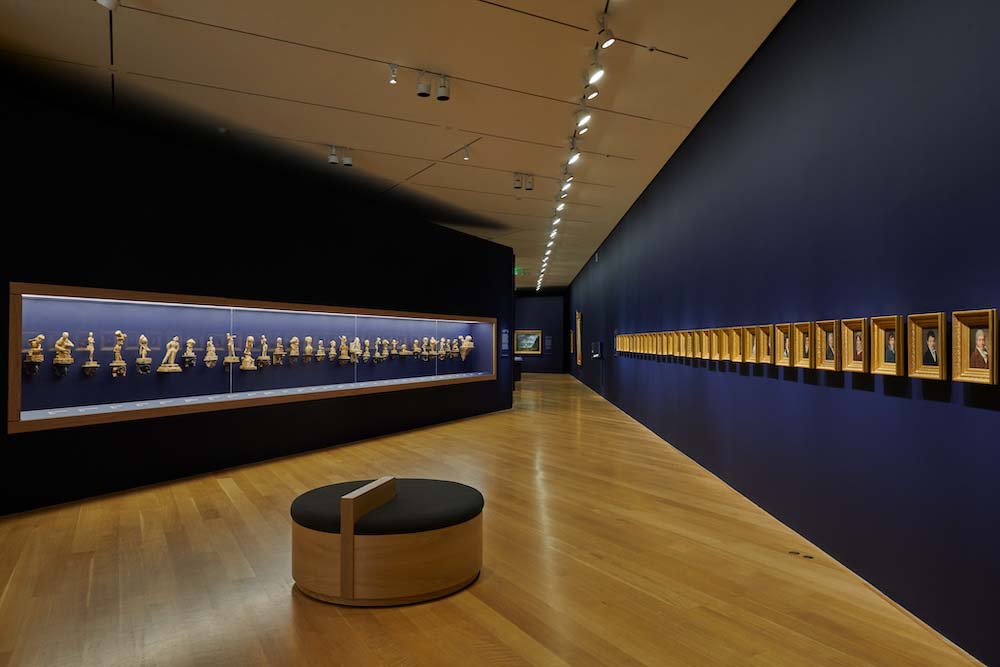
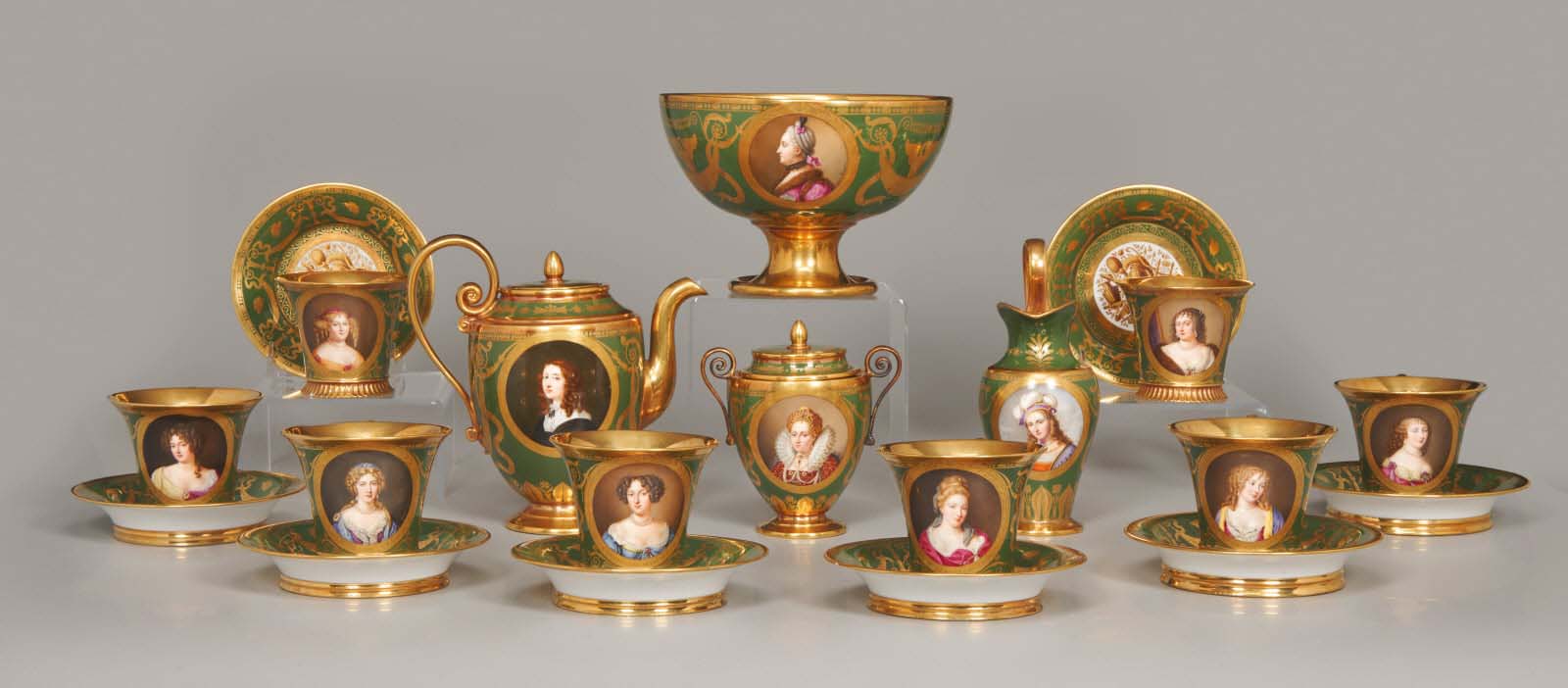
One important acquisition is the Tea Service of Famous Women, produced by the Sèvres Porcelain Manufactory in 1811–1812. The twenty-piece hard-paste porcelain service features miniature portraits painted by Marie-Victoire Jaquotot of sixteen prominent women from European history. Originally intended as a gift from Napoleon to Empress Joséphine, the service was later presented by Empress Marie-Louise to the Countess of Ségur. It is one of only three known versions of the set and is currently on view in the Clark’s permanent collection galleries.
The Clark has also recently acquired a notable group of abolitionist ceramics. Among them is a jasperware medallion designed by Josiah Wedgwood and William Hackwood for the Society for Effecting the Abolition of the Slave Trade, produced around 1787–1790. An English two-handled earthenware cup made around 1870 commemorates William Wilberforce and the abolition of slavery in Britain, while an earlier abolition jug and decorated dish demonstrate how ceramic objects could carry political and moral messages into the domestic sphere. The Clark’s decorative arts galleries also include European porcelain, Chinese export ceramics, silver, furniture, and glass, allowing visitors to consider how objects participated in hospitality, status, trade, collecting, and everyday rituals.
5 PM: Walk the Clark Grounds
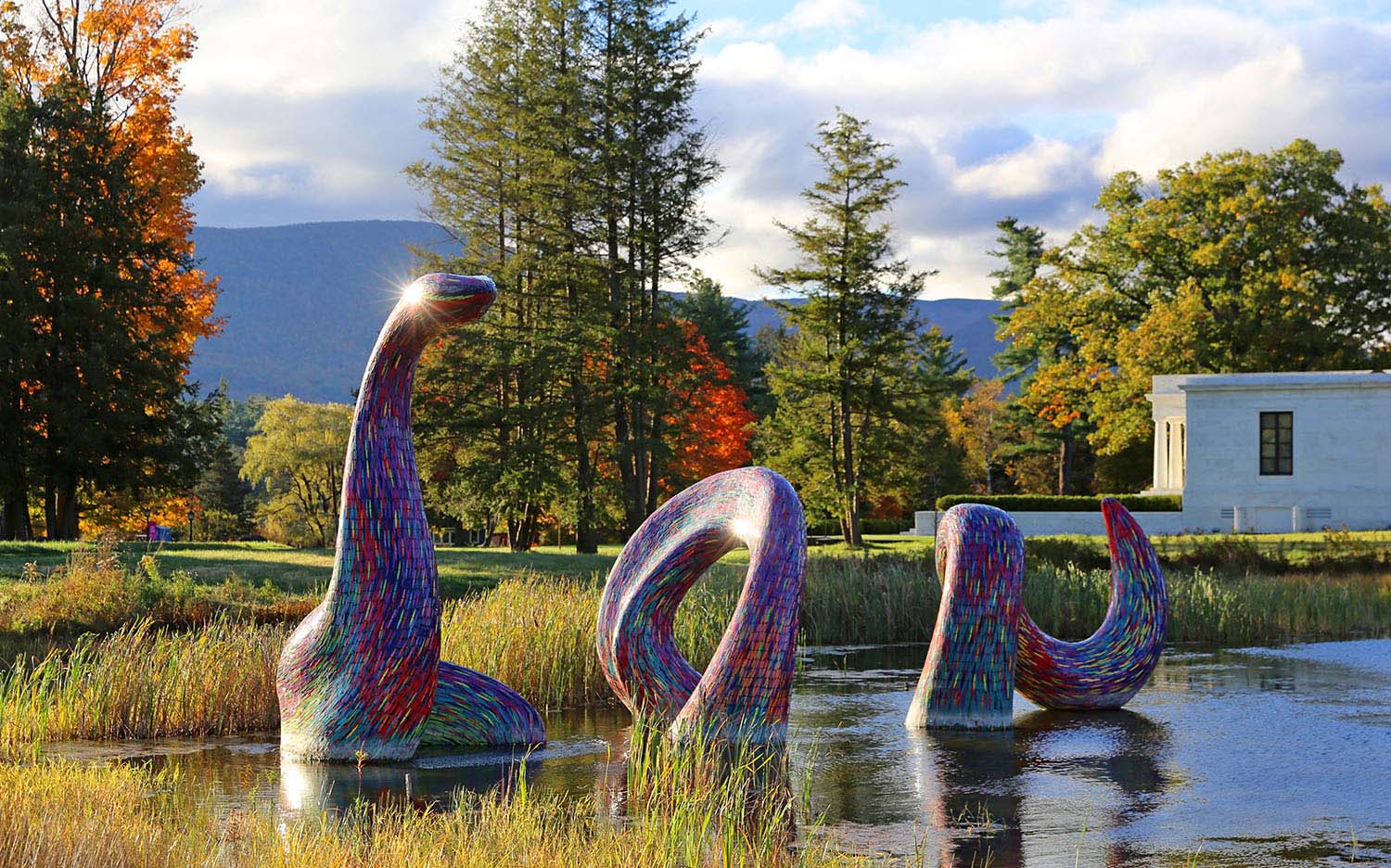
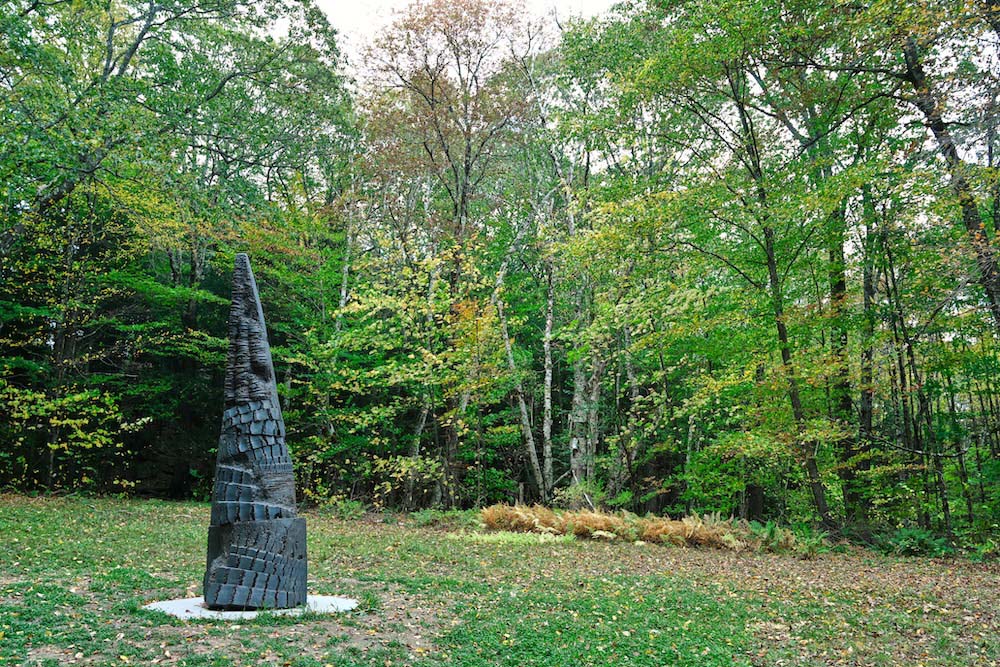
When the galleries close, do not leave immediately. The Clark’s campus extends across reflecting pools, meadows, wooded paths, and walking trails. Currently on view through October 12, 2026, Ground/work 2025,curated by writer and craft historian Glenn Adamson, places six monumental works by international artists throughout the Clark’s 140-acre campus. The exhibition considers craft traditions from around the world through materials including clay, mosaic, willow, stone, wood, and indigo.
Look for Mexican architect Javier Senosiain’s Coata III, a serpentine sculpture covered in hand-cut glass mosaic that rises in and out of Schow Pond, drawing on the imagery of the Aztec deity Quetzalcoatl. For ceramic visitors, do not miss Japanese master Yō Akiyama’s Oscillation: Vertical Garden, an unglazed stoneware sculpture made with iron powder.
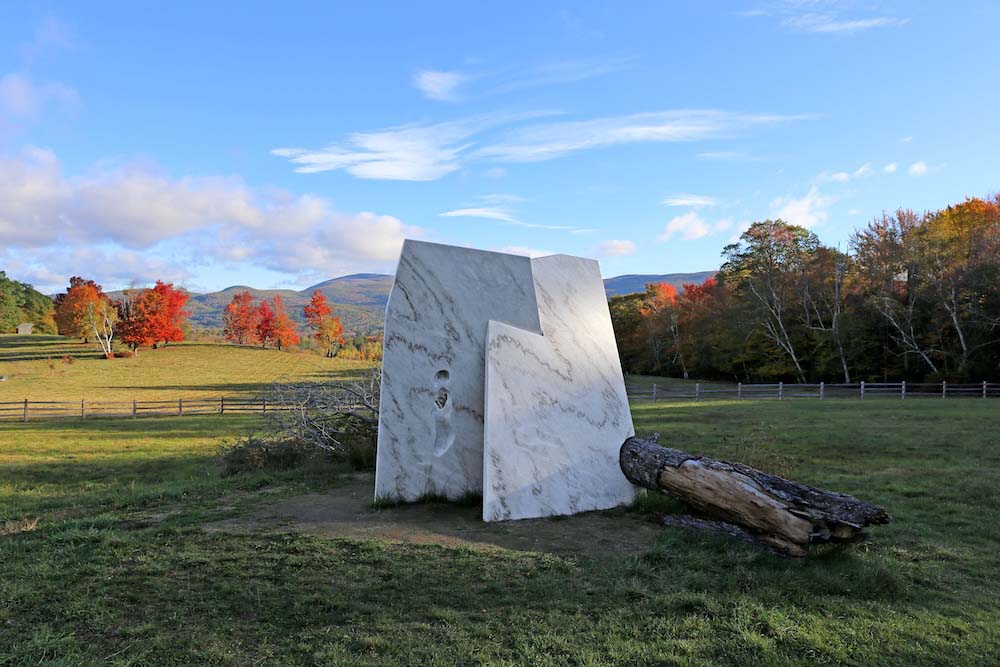
Nearby, the Williams College Museum of Art is currently closed during a major building project and is expected to reopen in 2027. Its encyclopedic collection includes ceramics spanning from prehistory to the present, with recent acquisitions including Jacqueline Bishop’s Market Woman Story and work by Brendan Lee Satish Tang.
7 PM: Dinner in Williamstown or North Adams
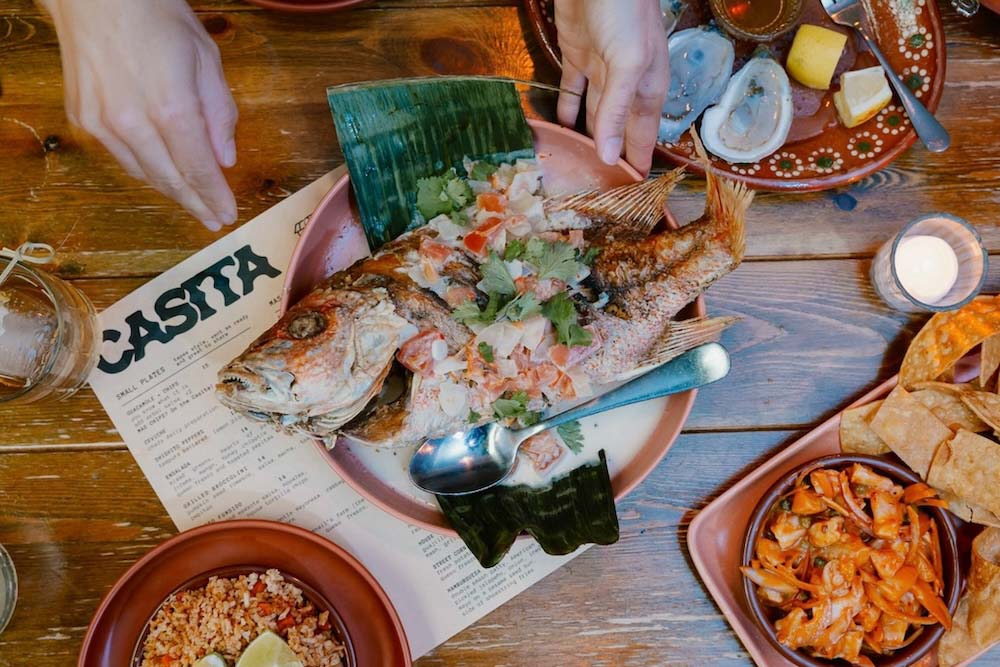
For a relaxed meal close to Williamstown, stop at Mezze Bistro + Bar, known for seasonal, locally sourced food in a warm farmhouse setting. It is a good choice if you want to linger in the northern Berkshires after walking the Clark grounds. If you are heading back toward North Adams, The Airport Rooms or State Food + Drink are convenient options along the way. For something more casual, return to the MASS MoCA campus and eat at Casita, which serves Mexican-inspired food and drinks within the museum complex.
Before heading out, check MASS MoCA’s events calendar. On certain weekends, a concert, film, festival, or performance can extend the evening and offer another way to experience the campus beyond the galleries.
9 AM: Historic Deerfield
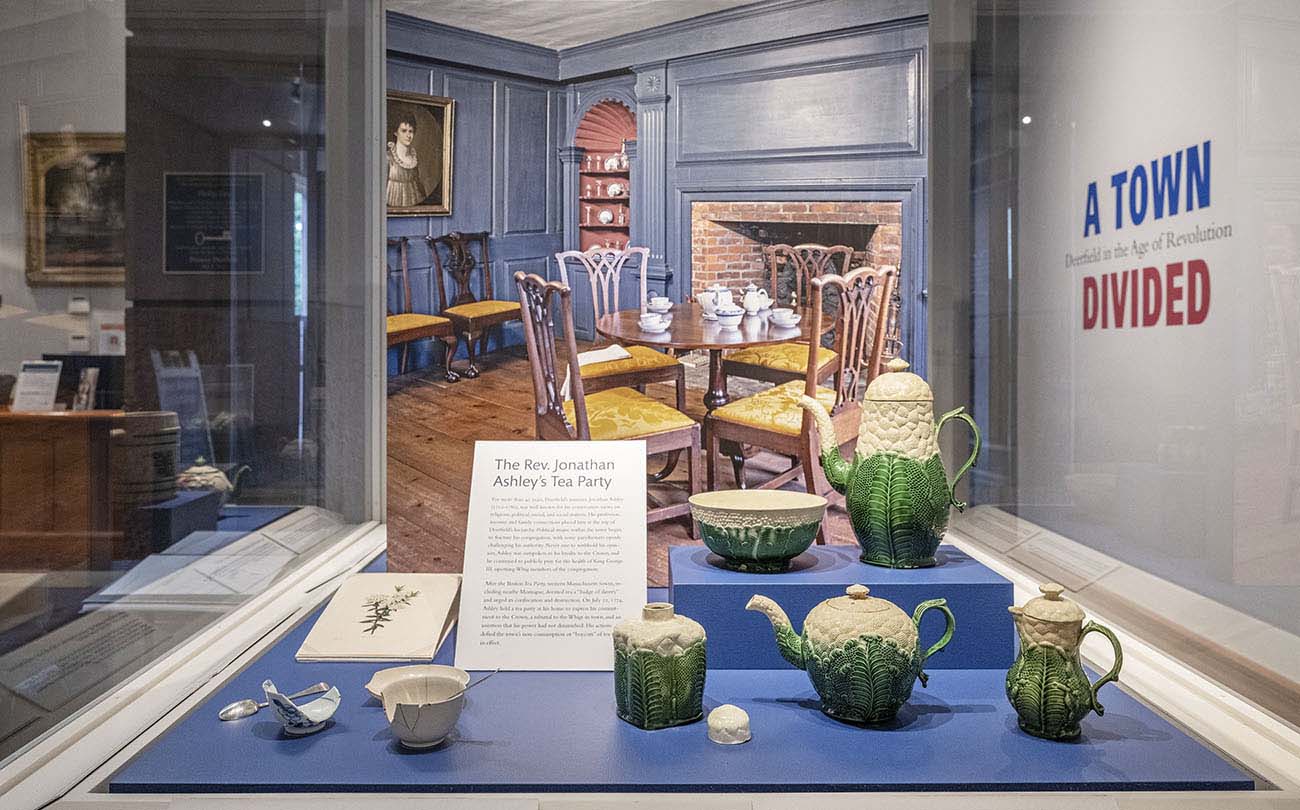
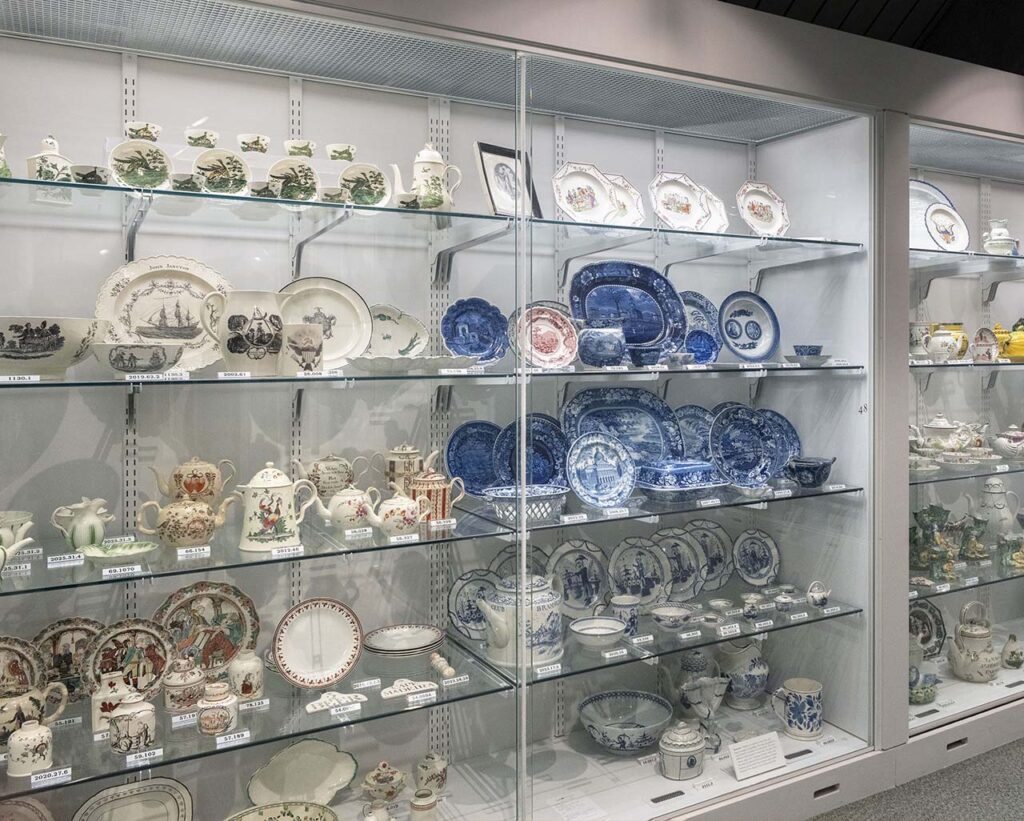
Begin the day at Historic Deerfield,where ceramics can be understood through the material life of early New England households. The museum’s historic houses and collections bring together tablewares, storage vessels, redware, stoneware, English ceramics, Chinese export porcelain, furniture, textiles, and other domestic objects. Seen within reconstructed interiors, these pieces reveal how ceramics participated in cooking, dining, hospitality, trade, social status, and everyday routines. Begin with one of the guided historic-house tours, then leave time for the Flynt Center of Early New England Life, where decorative arts and ceramics from the museum’s larger collection can be explored in greater depth.
For a less formal and more eclectic approach to objects and local history, cross the street to Memorial Hall Museum, Western Massachusetts’ oldest museum. Housed in a 1798 brick schoolhouse, the museum holds more than 50,000 objects, manuscripts, and documents. Its collections range from archaeological finds and colonial objects to contemporary material, with particularly deep holdings in ceramics, quilts, and dolls.
12:30 PM: Lunch at the Montague Bookmill
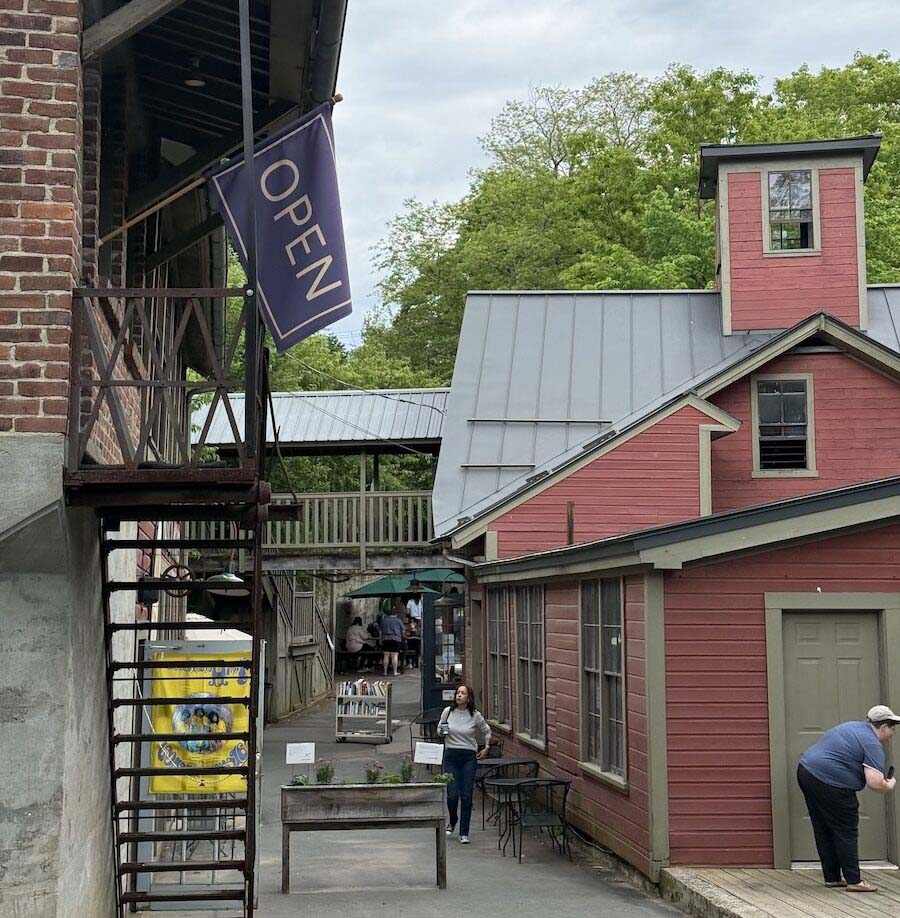
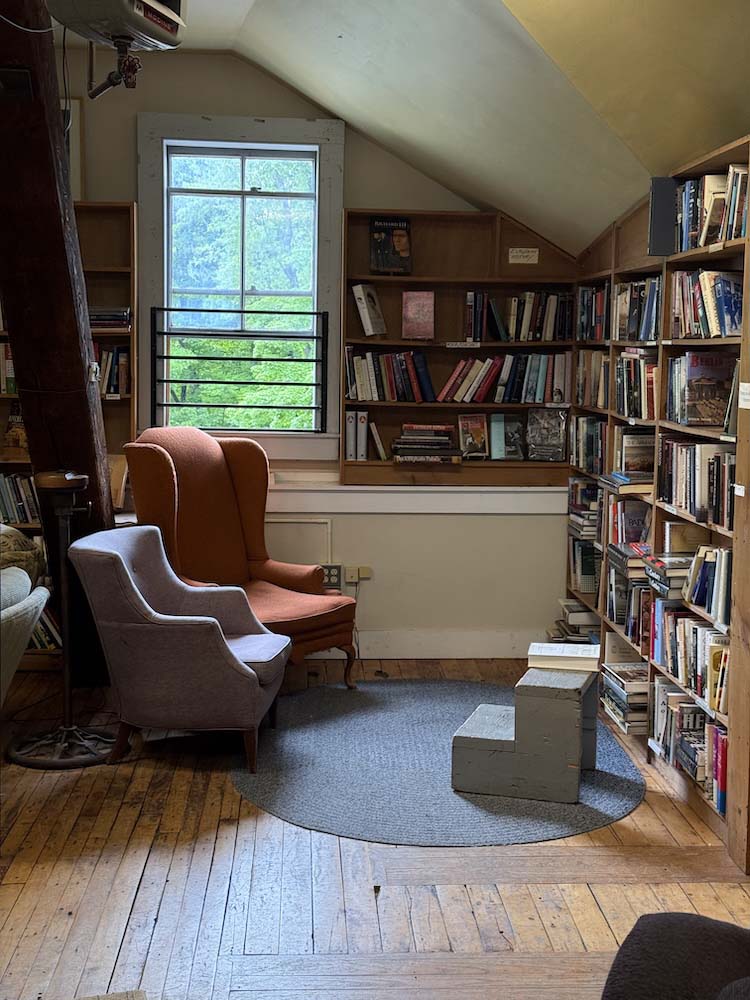
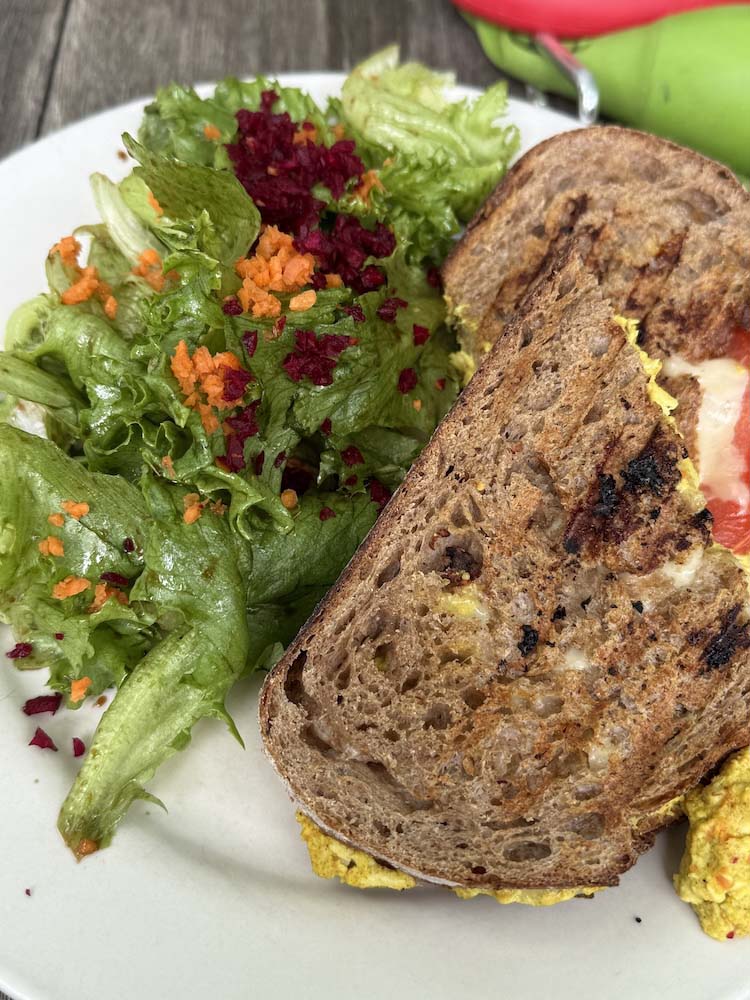
From Historic Deerfield, drive approximately 15 minutes to the Montague Bookmill, a used bookstore housed in a historic former gristmill beside the Sawmill River. Wander through the shelves before having lunch at The Lady Killigrew Café, located within the mill complex. Grab a sandwich, salad, baked good, or coffee and, when the weather allows, find a seat overlooking the river.
While browsing, keep an eye out for books on craft, ceramics, decorative arts, regional artists, and local history.
Before leaving, stop into Sawmill River Arts, an artist-run gallery featuring work by regional makers, including ceramics by local artists. It is a great place to pick up a handmade gift or souvenir while supporting artists working in the area.
2:30 PM: Shelburne Falls
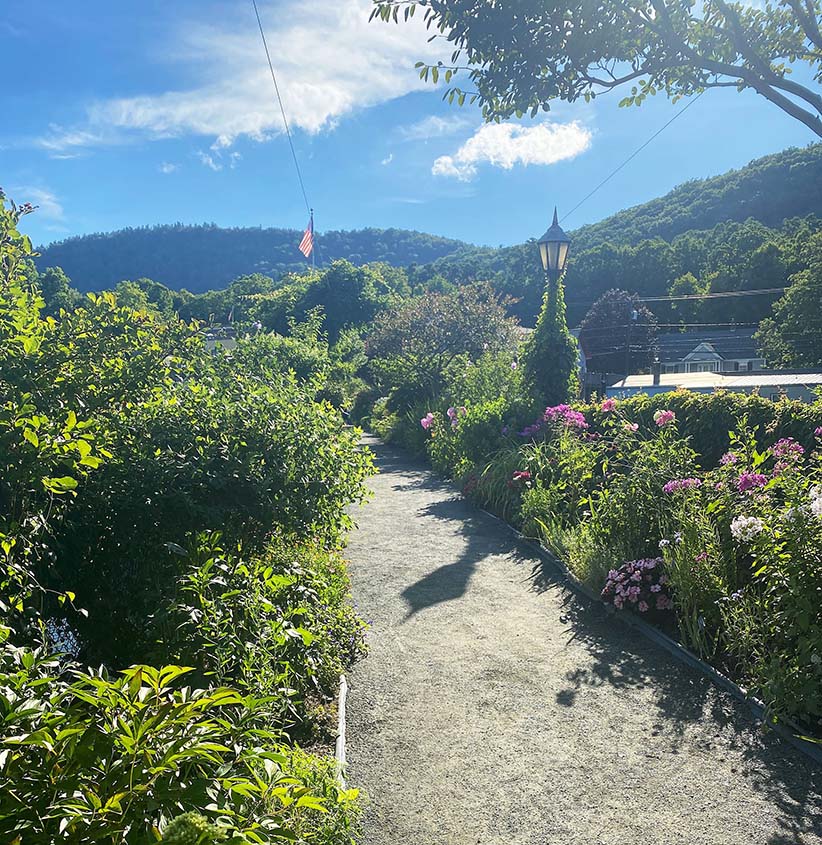
From the Montague Bookmill, drive approximately 30 minutes west to Shelburne Falls, a walkable village along the Deerfield River known for its arts community, historic architecture, independent shops, and dramatic river landscape.
Spend the afternoon moving at a slower pace through the village. Browse local galleries and shops, walk across the Bridge of Flowers, and stop at the overlook above the glacial potholes carved into the riverbed below.
Ceramics, glass, jewelry, textiles, and other handmade objects appear throughout the village in galleries and shops representing artists from Western Massachusetts and the surrounding area.
Optional Studio Visits in Shelburne Falls
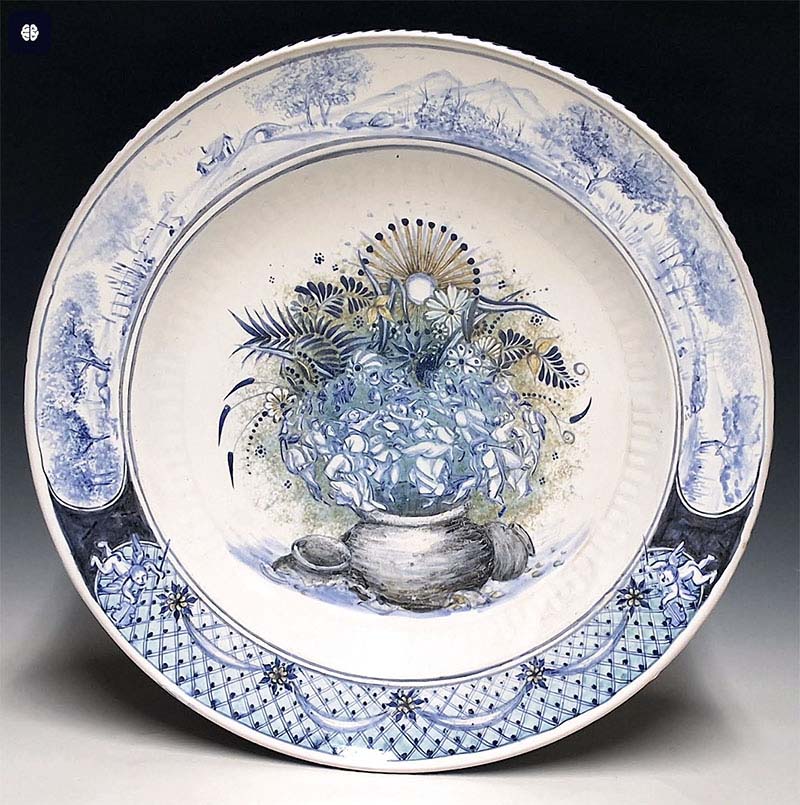
If you are interested in ceramic history, redware, or early American pottery traditions, Stephen Earp is always a wonderful person to visit. His practice is deeply informed by historical redware and delftware techniques, and he is exceptionally knowledgeable about the histories, materials, and processes behind them.
Even if you simply want to stop in and talk about ceramic history, Steve is always a good conversation. His studio overlooks the river, making it an especially memorable place to spend some time learning about the traditions that continue to inform contemporary studio pottery.
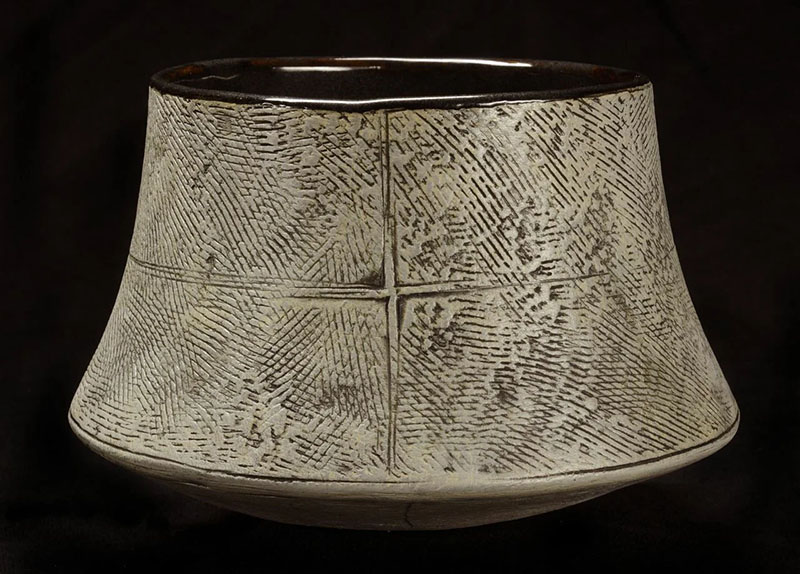
Barringer’s studio is also in Shelburne Falls and is an equally lovely visit. Her practice moves between functional pottery and sculptural form, with a deep sensitivity to surface, touch, and the expressive possibilities of clay. She served as an editor of Studio Potter for more than a decade, and her experience as a maker, writer, and observer of the ceramic field makes conversation with her especially rewarding. Her studio is beautiful, her dog is charming, and if you arrive with a genuine love of ceramics, you are unlikely to run out of things to talk about!
For a broader look at galleries, artists, and cultural spaces throughout Shelburne Falls, use the village’s Arts & Culture guide.
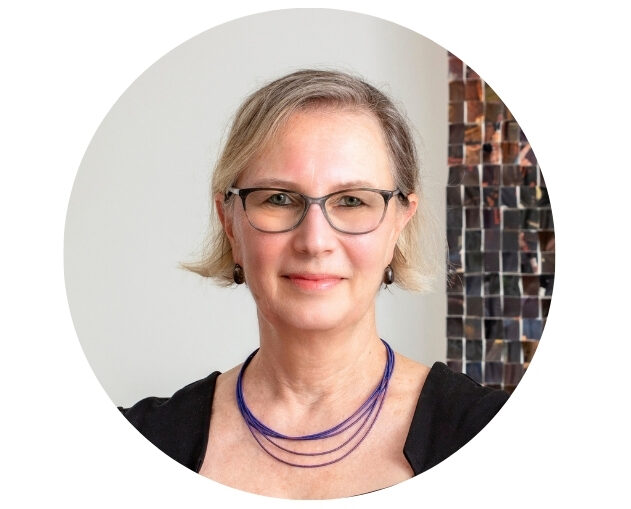
Leslie Ferrin is the director of Ferrin Contemporary, based in Cummington, MA. Specializing in contemporary ceramic art from 1950 to the present, she is an internationally respected curator who works to support artists and private collectors in partnership with galleries and museums worldwide. In addition to the gallery, Ferrin directs Project Art, a live/work international ceramic artist residency. As a trusted expert and adviser to private collectors, curators, and museums, she is considered a foremost authority on contemporary ceramics, focusing on market trends, career development, and historical context, and has been lecturing throughout the United States and Europe for over forty years. VISIT FERRIN CONTEMPORARY

Shay Ye is a ceramic artist, researcher, and current student at Alfred University whose academic background spans biological sciences, art history, and museum and gallery practice. Her work centers on ceramics as both a material and an object of research, with particular interest in material culture and the ways objects mediate daily life, ritual, memory, and social exchange, shaping the everyday curation of the human experience. Her selected writing on ceramics, objects, and material culture can be found on Why the Cup Exist.In 2026, Ye worked with Project Art in Western Massachusetts, where she developed the Field Guide to Ceramics in Western Massachusetts through archival research, studio visits, and conversations with artists across the region.

Isabel Twanmo has managed Communications, Marketing & Media, and Collections Services for the Project Art Gallery since 2023, adding these roles to her ever-growing repertoire since joining the Ferrin Contemporary team in 2021. Originally from Cabin John, MD, Isabel graduated with a Bachelor’s degree from Bennington College in 2018 with concentrations in music, visual arts, and neuroscience. She has worked in a variety of fields including film & TV, hospitality, art handling, and arts administration. In her personal work, Isabel is a visual artist and avid home cook. VISIT FERRIN CONTEMPORARY
Curious about our next ceramic guide to a city? Kolkata, India and Quito, Ecuador are coming next! You too can feature ceramic destinations in your city. To share a guide, event, exhibition news, or research, visit our CONNECT PAGEfor more information!